Where Is the Safest Place to Buy a Puppy?

The safest place to get a puppy is from a reputable breeder or by adopting from local shelters and rescue organizations. Reputable breeders focus on ethical practices and provide thorough health clearances for their puppies. You should visit their facilities to check living conditions and meet the puppy's parents. Alternatively, adopting from a shelter gives a pet a loving home and reduces demand for puppy mills. Avoid pet stores and poorly vetted online sources, as they often support inhumane breeding conditions. Looking for ethical breeders and considering adoption encourages responsible practices. Uncover the finer points to guarantee a healthy, happy puppy.
Understanding Puppy Mills
Puppy mills are a harsh reality that every potential pet owner should understand. These inhumane breeding facilities prioritize profit over animal welfare, often keeping mother dogs in cramped cages with minimal attention. With an estimated 10,000 puppy mills operating in the United States alone, around 500,000 dogs are used solely for breeding purposes. This results in approximately 2.6 million puppies sold each year, perpetuating a cycle of suffering.
Many puppy mills disguise themselves as responsible breeders, using deceptive marketing tactics to misrepresent their breeding conditions. It's vital for potential buyers to differentiate between these mills and genuine responsible breeders. Responsible breeding practices emphasize transparency—allowing you to visit breeding facilities, meet parent dogs, and guarantee the puppies are raised in humane environments. Transparency also includes providing health guarantees, which are often absent in puppy mill conditions.
To make informed decisions, you should seek breeders who prioritize animal welfare and offer clear insights into their breeding practices. By doing so, you help combat the unethical practices of puppy mills and support breeders committed to the health and happiness of their dogs. Always remember, a responsible breeder is open about their breeding facilities and conditions.
Health and Welfare Concerns
While understanding the grim reality of puppy mills is fundamental, it's likewise vital to address the considerable health and welfare concerns these operations create. Puppies from puppy mills often face numerous health issues due to poor breeding practices and a lack of proper veterinary care. These conditions result in long-term emotional and financial burdens for you as an adoptive family. With around 500,000 dogs kept solely for breeding in such mills across the U.S., overbreeding is rampant, leading to genetic health complications in the puppies sold.
The poor sanitation and overcrowded living conditions in puppy mills exacerbate these problems, allowing diseases to spread rapidly and endangering both puppies and their mothers. Reports like the 2024 Horrible Hundred highlight the ongoing prevalence of inhumane breeding practices, underscoring the pressing need for change in this industry.
In contrast, responsible breeders prioritize animal welfare. They guarantee health clearances for both puppies and their parents, which greatly increases your chances of adopting a healthy dog. These breeders adhere to ethical breeding practices and provide proper veterinary care, so puppies grow up in environments that support their well-being. By choosing them, you're making a responsible decision for your family and your future pet.
Adoption as a First Choice

Adoption offers a compassionate and ethical way to welcome a new dog into your home. By choosing to adopt a dog, you're providing a loving home for animals in need and supporting the fight against unethical practices like puppy mills. Local shelters and rescue organizations often have lower adoption fees, making it a more affordable option compared to breeders or pet stores. You'll also find knowledgeable staff ready to help guarantee successful adoptions by matching you with a pup that fits your lifestyle.
If you're set on a particular breed, don't worry. Breed-specific rescue groups exist to help you find your desired breed without endorsing unethical breeding practices. This guarantees you can still adopt a dog while promoting animal welfare.
When you adopt, you're part of a broader movement to reduce the 2.6 million puppies sold annually from puppy mills. Here's why adopting is a great choice:
- Animal Welfare: Adopting saves lives and reduces demand for inhumane puppy mill practices.
- Cost-Effective: Lower adoption fees make it a budget-friendly option.
- Variety: With breed-specific rescues, you can find the perfect match for your family.
Choose adoption and make a difference.
Finding Responsible Breeders
When searching for a puppy, it's vital to find responsible breeders committed to ethical practices. Responsible breeders guarantee that each healthy puppy is raised in a loving and nurturing environment. This means paying attention to proper care and socialization from an early stage. To truly understand their breeding practices, you should visit the breeding premises. This gives you a firsthand look at the living conditions and lets you meet the puppies' parents, offering valuable insight into their temperament and genetic health.
Health clearances are a must when considering a breeder. Responsible breeders provide these clearances for both puppies and their parents, proving their dedication to preventing hereditary issues and maintaining genetic health. Remember, registration papers alone don't guarantee humane treatment. It's vital to prioritize breeders who demonstrate transparency and are open to answering your questions about their methods.
Ethical breeding practices guarantee the well-being of the dogs, focusing on health, temperament, and finding suitable homes for each puppy. By choosing responsible breeders, you're supporting practices that prioritize the dogs' welfare, guaranteeing your new furry friend comes from a background of care and commitment.
Risks of Pet Stores
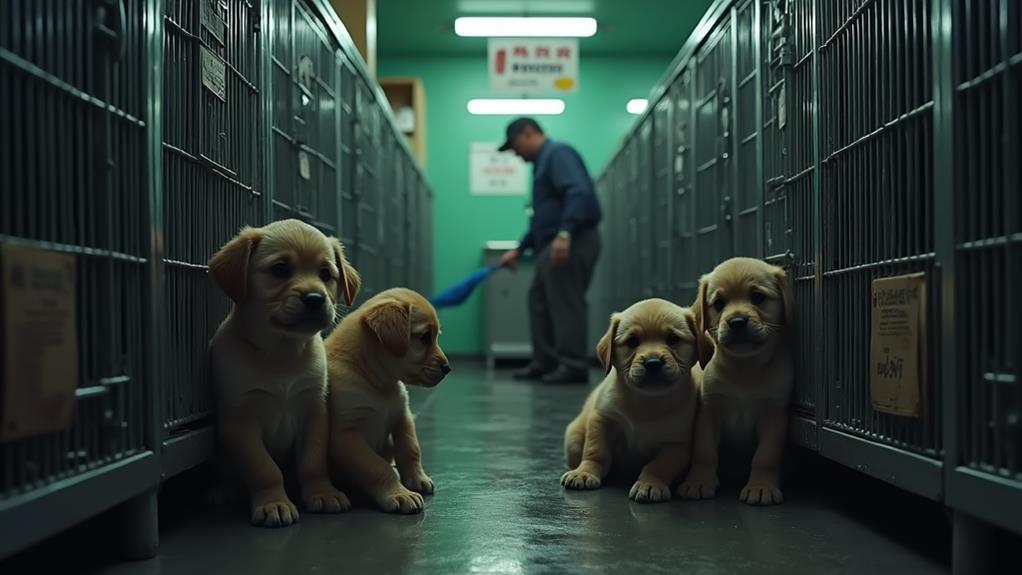
After understanding the significance of responsible breeders, it's crucial to be aware of the risks associated with purchasing puppies from pet stores. Most pet stores source their puppies from puppy mills, which prioritize profit over animal welfare. This leads to inhumane breeding conditions where puppy suffering is rampant. Dogs raised in such environments often face significant health issues and poor socialization due to the lack of proper care during their critical early life stages.
When considering where to get a puppy, keep in mind these risks associated with pet stores:
- Puppy Mills: These establishments often supply pet stores, focusing more on quantity than quality, resulting in numerous neglected and unhealthy puppies.
- Health Issues: The puppies' compromised breeding conditions often lead to multiple health problems that can be costly and heartbreaking for new owners.
- Misrepresentation: Pet stores frequently mislead buyers about the origins of their puppies, making it difficult to confirm you're supporting ethical breeding practices.
Opting for adoption from shelters or rescues is a more ethical choice. It not only provides a home to a dog in need but also reduces the demand for puppy mills, promoting better animal welfare in general.
Evaluating Online Breeders
Frequently, finding a trustworthy breeder online can seem challenging, but knowing what to look for simplifies the process. When evaluating online breeders, prioritize those committed to transparency. Reputable breeders openly share information about their breeding practices and health clearances for both puppies and parent dogs. They should also invite you to visit their facilities, guaranteeing they meet ethical breeding standards and prioritize animal welfare.
Look for breeders registered with recognized kennel clubs, as these organizations require adherence to strict guidelines. This registration indicates a commitment to ethical practices and the well-being of the animals. Beware of red flags such as unusually low prices or breeders who avoid direct communication. These could signal unethical breeding practices.
A reputable online breeder will provide a clear, written contract outlining terms of sale, including puppy health guarantees and return policies. This contract protects you and guarantees a mutual understanding of responsibilities. Moreover, customer reviews and testimonials offer valuable insights into the breeder's reliability and the health and temperament of their puppies. By focusing on these factors, you'll increase your chances of finding a healthy, happy puppy from a trustworthy source.
Red Flags in Puppy Sales

In your search for a puppy, watch out for red flags that might signal unethical or irresponsible sellers. It's essential to guarantee that your future furry friend comes from a breeder committed to ethical breeding practices. One major warning sign is when a seller doesn't allow you to meet the puppy's parents. This lack of transparency could indicate a puppy mill environment, where the health and well-being of dogs aren't prioritized.
Here are some supplementary red flags to take into account:
- Multiple Breeds: If a seller advertises many breeds, they might not be a responsible breeder but rather operating a puppy mill. Ethical breeders typically focus on one or two breeds to maintain high standards.
- Lack of Documentation: Be cautious if a seller can't provide health clearances, vaccination records, or a written contract of sale. These documents are essential for verifying the puppy's health and the seller's credibility.
- Neutral Meeting Locations: If a seller insists on meeting in a parking lot or another neutral location, it might be an attempt to hide poor breeding conditions.
Advocating Against Puppy Mills
Spotting red flags in puppy sales is just one part of the expedition. It's essential to advocate against puppy mills, which are inhumane breeding facilities prioritizing profit over animal welfare. With an alarming 10,000 puppy mills operating in the U.S., housing about 500,000 dogs, your advocacy efforts are imperative. These mills produce around 2.6 million puppies annually, perpetuating a cycle of neglect and suffering.
You can fight this by supporting responsible breeding practices. Ethical breeders prioritize transparency and the health and well-being of their dogs. They allow you to visit their facilities, ensuring you see firsthand how the animals are cared for. When looking to bring a furry friend home, consider adoption from shelters, where countless pets await loving families.
Community mobilization plays a significant role in combating puppy mills. Engage with animal welfare organizations, donate, and spread awareness to dismantle these operations. By promoting the adoption of shelter pets and supporting ethical breeders, you contribute to a culture that values animal welfare. Your actions can help shift demand away from puppy mills, advocating for a future where every dog is bred responsibly and lives in a caring environment.
Resources for Pet Buyers

When you're ready to find a puppy, it's important to focus on reputable sources that prioritize the health and well-being of their animals. Start by considering reputable breeders, rescue centers, and private sellers. Reputable breeders often conduct breed-specific health tests to confirm puppies are healthy. They provide health certifications and documentation, including microchip certificates and vaccination records. Rescue centers offer an alternative by giving puppies a second chance with thorough health checks and generally lower adoption fees than breeders.
Before proceeding with any purchase, make certain to:
- Review Health Documentation: Ask for health certifications like microchip and vaccination records to verify the puppy's health status.
- Observe Ethical Practices: Confirm ethical breeding by visiting the location, meeting the parent dogs, and avoiding those who pressure you into quick decisions.
- Report Concerns: If you suspect unethical practices like puppy mills, report immediately to animal welfare organizations to protect other buyers.
Be wary of red flags such as sellers with multiple ads for different breeds or those who can't let you meet the parent dogs. By being diligent, you'll support ethical breeding while guaranteeing you bring home a healthy puppy.
Ensuring Puppy Health and Safety
Securing the health and safety of your puppy starts with choosing the right source. Opt for reputable breeders or rescue centers that perform thorough health checks, confirming your puppy is well-cared for and free from major health concerns. Responsible breeders will provide health clearances for both the puppies and their parents, which minimizes the risk of genetic health issues. Always request veterinary documentation that includes a health certificate, vaccination records, and a contract of sale. This paperwork not only protects your investment but also guarantees your puppy's ongoing well-being.
Steer clear of sources that don't allow you to meet the parent dogs or visit the breeding environment. These could be indicators of puppy mills, which often neglect proper care and animal welfare. A transparent breeding environment is vital to verify that the puppies have been raised responsibly. Engaging with organizations focused on animal welfare can help you verify the credibility of breeders, providing further assurance that you're making a safe choice for your new puppy. By taking these steps, you can guarantee that your furry friend will be a healthy and happy enhancement to your family.