Where Is the Best Place for a Puppy to Sleep?
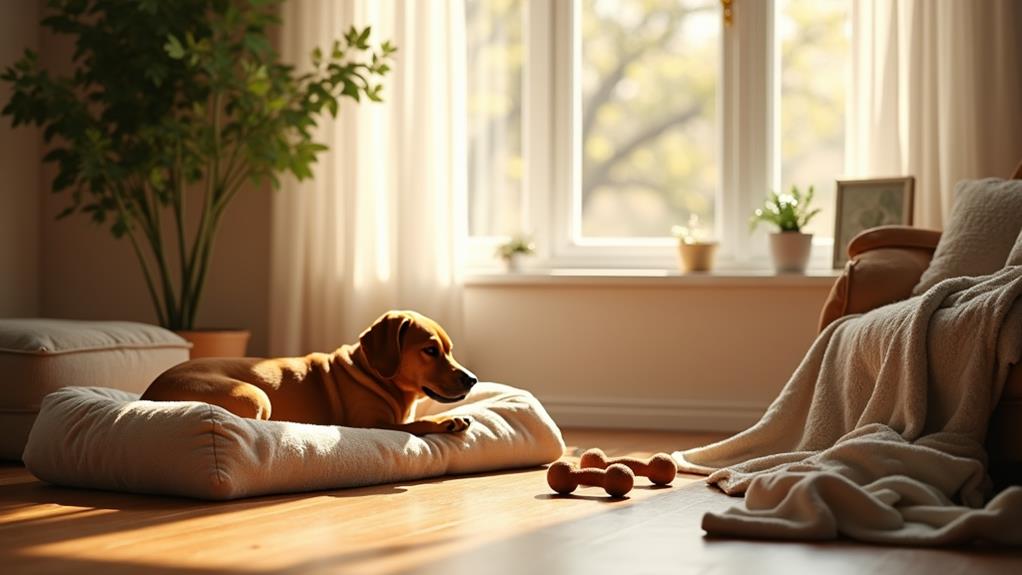
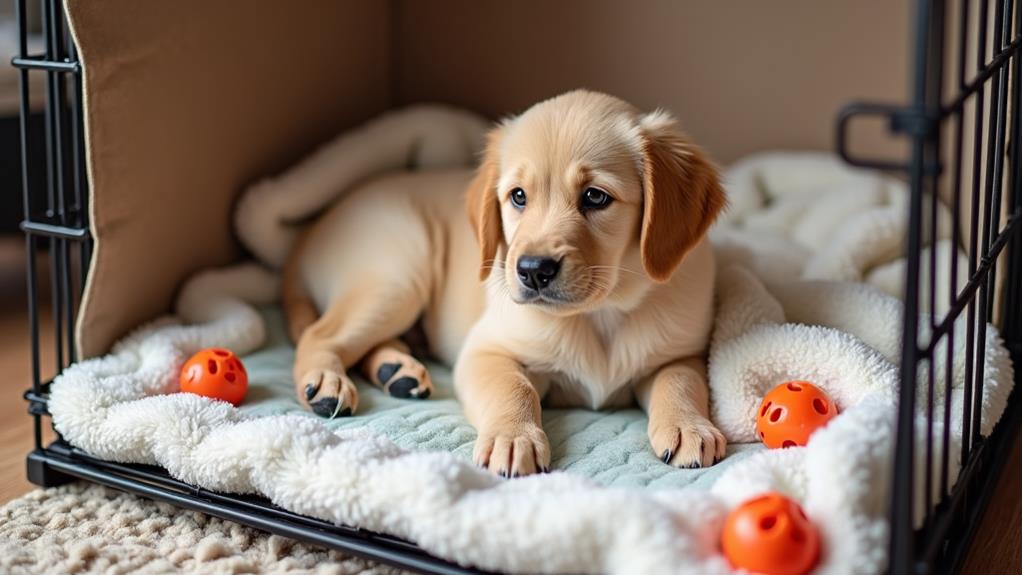
You should let your puppy sleep in a cozy crate in your bedroom. This setup offers comfort and reassurance, helping to reduce anxiety for your new furry friend. Crate training also encourages house training, as dogs typically avoid soiling their sleeping area. To make the crate inviting, line it with a comfortable dog bed and include familiar items carrying scents from the breeder. Position the crate in a quiet corner to minimize noise and disturbances. As your puppy becomes more independent, gradually move the crate to its permanent location. Uncover how establishing a bedtime routine can ease this shift.
Choosing the Right Sleeping Spot
In regards to choosing the right sleeping spot for your new puppy, start by keeping them close. Your bedroom is the ideal initial sleeping area, offering your puppy comfort and reassurance during their primary night. It helps ease the change into a brand-new environment, making them feel secure and loved. A crate serves as a safe and cozy bed, providing a sense of security that's vital for a new puppy.
Line the crate with a comfortable dog bed and some familiar items, like a blanket with their scent, to promote relaxation and reduce anxiety. Position the crate in a quiet corner of your room, away from noise and disturbances, to help your puppy settle down and establish good sleep patterns.
As your puppy becomes more comfortable, you can gradually move the crate further away from your bedroom, helping them acclimate to sleeping independently. This gradual shift is fundamental in crate training and helps your puppy feel secure even when they're not right next to you. Remember, creating a warm, inviting sleeping area with a cozy bed will encourage better sleep habits from the start.
Benefits of Crate Training
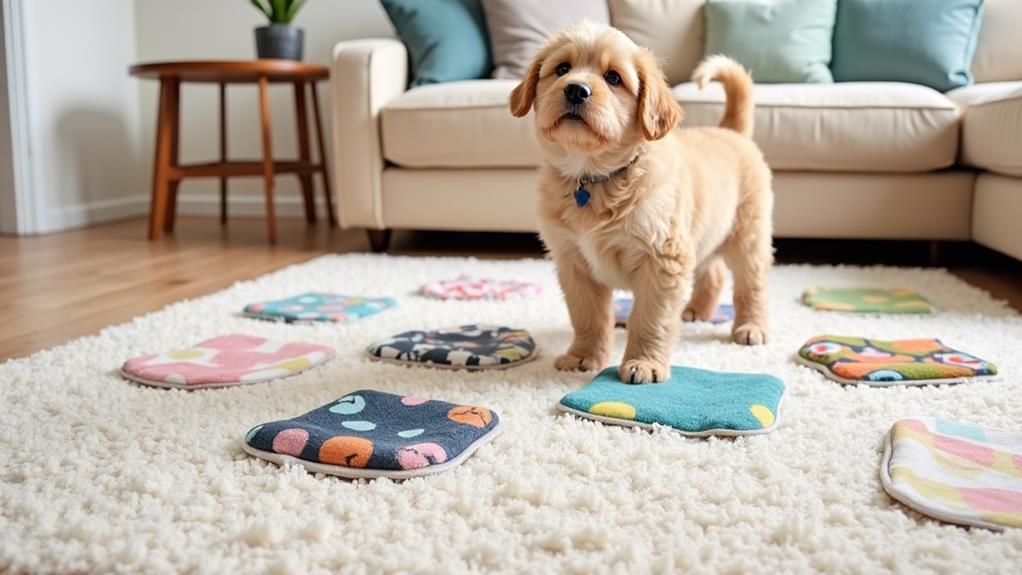
Crate training offers numerous benefits that guarantee your puppy's well-being and development. By incorporating crate training into your sleeping arrangements, you provide a safe and secure environment, meeting crucial puppy needs. It helps prevent accidents and injuries, leading to peace of mind when your furry friend is unsupervised. The crate also aids in house training. Puppies naturally avoid soiling their sleeping area, which means quicker potty training success. This method seamlessly integrates into your routine, helping establish a structured lifestyle.
Furthermore, a crate gives your puppy personal space where they can feel secure. This dedicated place to rest becomes a sanctuary, especially during stressful situations, reducing anxiety considerably. You can use treats and toys to create positive associations, ensuring your puppy views the crate as a delightful retreat rather than punishment. This positive relationship fosters a well-adjusted dog that happily uses their crate.
Moreover, crate training helps manage your puppy's sleep schedule, promoting better rest. As your puppy becomes accustomed to their sleeping arrangements, the likelihood of disruptive nighttime behavior decreases. In general, crate training is an invaluable tool, enhancing your puppy's development and ensuring a harmonious household.
First Night Strategies
When bringing your puppy home for the initial night, you'll likely want to guarantee they feel safe and secure in their new environment. To facilitate a smooth adjustment and help them acclimate, consider these initial night strategies:
- Location Matters: Place your puppy's crate in your bedroom. This provides comfort and reassurance, helping them feel less anxious during their first adjustment period. Having you nearby will also make it easier to respond to their needs, building trust and security.
- Incorporate Familiar Smells: Use a blanket or toy from the breeder with familiar scents. These familiar smells can be comforting and aid in reducing your puppy's stress. It also adds a layer of security, helping them relax and settle in more easily.
- Avoid Crying Alone: Don't let your puppy cry alone in their crate. Instead, respond promptly to their needs. This approach not only prevents potential attachment issues but also helps your puppy feel secure, knowing you're there to support them.
Over time, gradually acclimate your puppy to sleeping alone by slowly moving their crate further away. This method helps your puppy feel more secure and independent as they adjust to their new home.
Setting Up a Cozy Crate
Creating a cozy crate for your puppy involves thoughtful preparation to guarantee their comfort and security. Start by lining the bottom with soft bedding, offering a snug spot for your puppy to settle into. Including familiar items like a blanket or towel carrying their mother's scent can greatly improve their sense of security. A chew-proof bed, appropriately sized, guarantees they're comfortable as they grow and supports their natural sleeping patterns.
Position the crate in a quiet area of your home. This minimizes disturbances, allowing your puppy to rest peacefully. A quiet location transforms the crate into a safe haven, where they can retreat when they need a break from the hustle and bustle.
Introduce the crate gradually to your puppy. Let them investigate it with the door open, encouraging them to enter on their own. This approach helps foster a positive association with their new sleeping space. By doing so, your puppy learns that the crate is a secure environment where they can relax and feel at ease. With these steps, you'll create an inviting and restful space that supports healthy puppy sleeping habits.
Bedtime Routines

A well-structured bedtime routine can significantly improve your puppy's sleep quality. By establishing a consistent routine, you help your puppy recognize when it's time to wind down, making it easier for them to sleep through the night. A few simple steps can make a big difference:
- Gentle Training and Playtime: Engage in gentle training or play sessions before bedtime. This not only provides mental stimulation but also tires your puppy out, making settling down much more manageable.
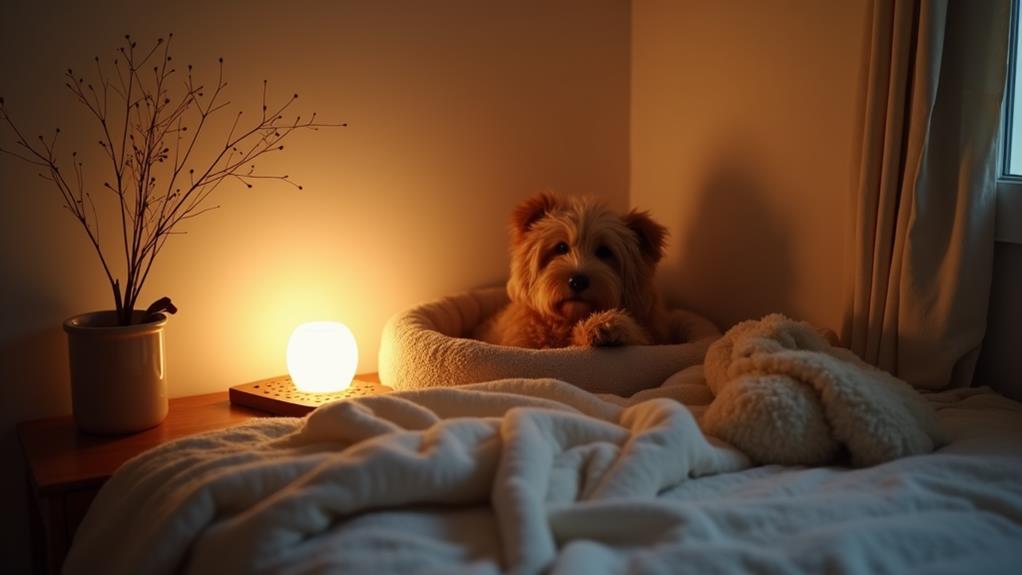
- Calm Environment and Quiet Corner: Create a calm environment by turning off lights and reducing noise. Guide your puppy to a quiet corner where their bed or crate is located. This signals that playtime is over and encourages relaxation.
- Potty Break and Nighttime Snack: Take your puppy out for a potty break right before bed. This step is essential to prevent any accidents overnight. Furthermore, offering a small nighttime snack can curb hunger and guarantee your puppy stays comfortable throughout the night.
Managing Nighttime Crying
Nighttime crying in puppies can be a challenging phase, but understanding the reasons behind it helps you respond effectively. Often, a puppy cries at night because they need to go to the toilet or are seeking comfort. During the initial few nights at home, they might feel anxious in a new sleeping environment. Monitoring their behavior is key to knowing when they truly need a bathroom break versus when they just need reassurance.
When you hear your puppy crying, approach them calmly and avoid engaging in play. Quietly comforting them can reinforce calm behavior and prevent attention-seeking habits. If they need to go outside, take them for a quick bathroom break, which can be a crucial part of their toilet training routine. This consistency helps the puppy establish a routine, making the change smoother over time.
Avoid punishing your puppy for crying, as this may create negative associations with being alone and their sleeping space. Instead, focus on gradually acclimatizing them to being alone, fostering emotional well-being. By responding appropriately and consistently, you'll help your puppy adjust to their new home and nighttime routine more comfortably.
Transitioning to Independence
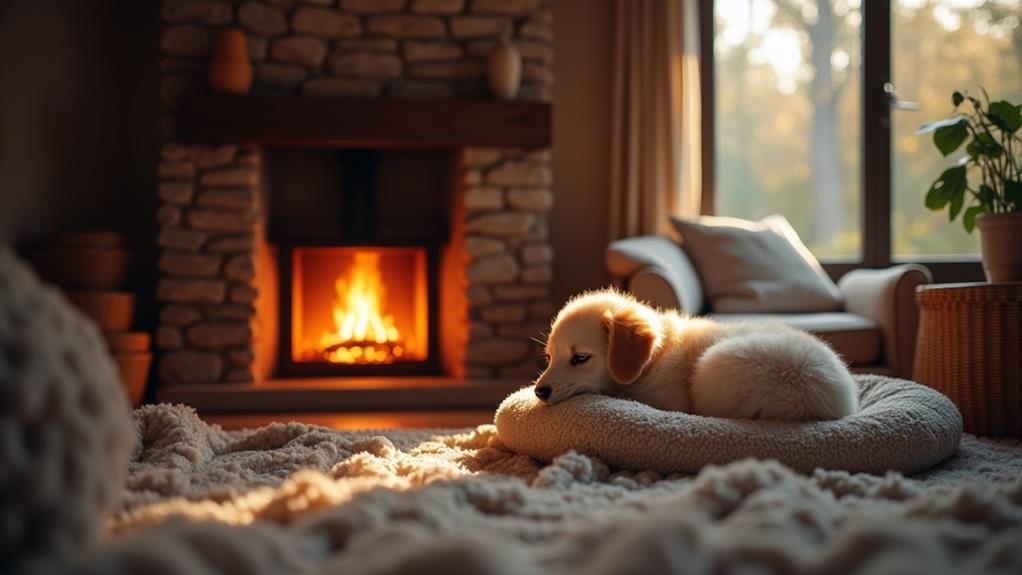
As you help your puppy manage nighttime crying, you're setting the stage for them to sleep independently. Shifting to independence is a significant step for your puppy in the crate. To ease this shift, gradually move the crate from your bedroom to a permanent sleeping spot. Remember, each puppy adjusts differently, so patience and consistency are vital. Puppies need to form positive associations with their sleeping area, so avoid using it as punishment.
To foster comfort in sleeping alone, maintain a calm atmosphere during bedtime routines. This helps them feel secure and supports the adjustment process. Monitoring behavior is fundamental—offer reassurance if they seem anxious. Here are three steps to reflect on:
- Gradual Crate Movement: Start by moving the crate a few feet from your bed every night until it reaches its new location. This helps your puppy adjust without feeling sudden separation.
- Calm Bedtime Atmosphere: Dim the lights and reduce noise levels. A soothing environment fosters confidence and security in your puppy.
- Behavior Monitoring: Pay attention to signs of distress and provide comfort. This reassures your puppy, reinforcing positive feelings about sleeping alone.
With time, your puppy will confidently adapt to sleeping independently.