Where Do You Place a Puppy Crate at Night?
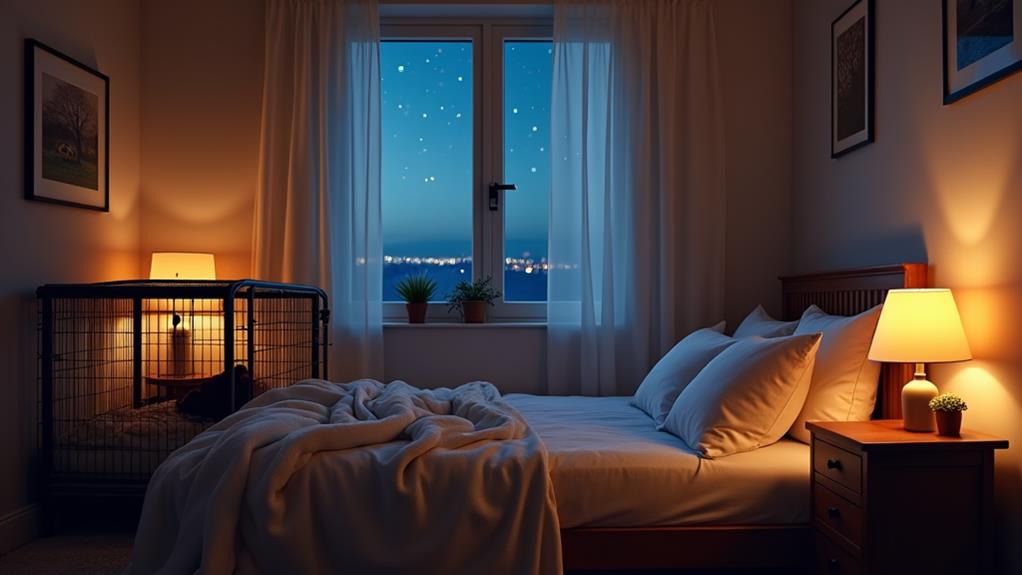
Place your puppy's crate in your bedroom at night to offer them comfort and security. This setup reduces anxiety and fosters a sense of closeness. Avoid high-traffic areas to minimize disturbances, and keep the crate away from direct sunlight, heat sources, and cold drafts. Make sure the crate environment is cozy with a cover, soft bedding, or a blanket for added warmth. A quiet, den-like atmosphere helps them feel safe and secure. Incorporate familiar items, like a hot water bottle, to ease anxiety. Introducing a consistent bedtime routine also signals it's time to sleep, and there's more to investigate.
Choosing the Ideal Location
When choosing the ideal location for your puppy's crate at night, consider placing it in your bedroom. This placement guarantees a comfortable environment where your puppy can hear your breathing, providing a sense of security and helping to reduce anxiety. Knowing you're nearby will help them settle down and sleep peacefully through the night.
While it might be tempting to place the puppy crate in high-traffic areas like the kitchen or living room corner, it's important to avoid these spots at night. Such locations can lead to disturbances, making your puppy feel less secure and potentially increasing anxiety. Instead, consider a spot where your puppy won't be interrupted by family activities.
Temperature is another critical factor when selecting a location. Keep the crate away from direct sunlight, heat sources, and cold drafts to maintain a comfortable temperature. You can improve their sense of security by using a crate cover, creating a cozy, den-like atmosphere. However, always monitor your puppy's comfort level to confirm they're happy with the setup. Choosing the right location for the crate helps create a peaceful and secure environment for your puppy at night.
Ensuring Comfort and Safety
Creating a cozy and safe environment in your puppy's crate is vital for their comfort and well-being at night. Start by placing the crate in a quiet place within your bedroom. This location helps your puppy feel secure and alleviates any nighttime anxiety by having you nearby. Make sure the crate isn't in high-traffic areas to avoid disturbances that could interrupt your puppy's sleep.
To improve your puppy's comfort and safety, create a den-like environment. Cover the crate with breathable materials, which helps your puppy feel snug and secure while ensuring proper ventilation. This setup prevents overheating and keeps the air inside the crate fresh. It's important to maintain a consistent temperature, so avoid positioning the crate in direct sunlight, near heat sources, or in drafts from air conditioning.
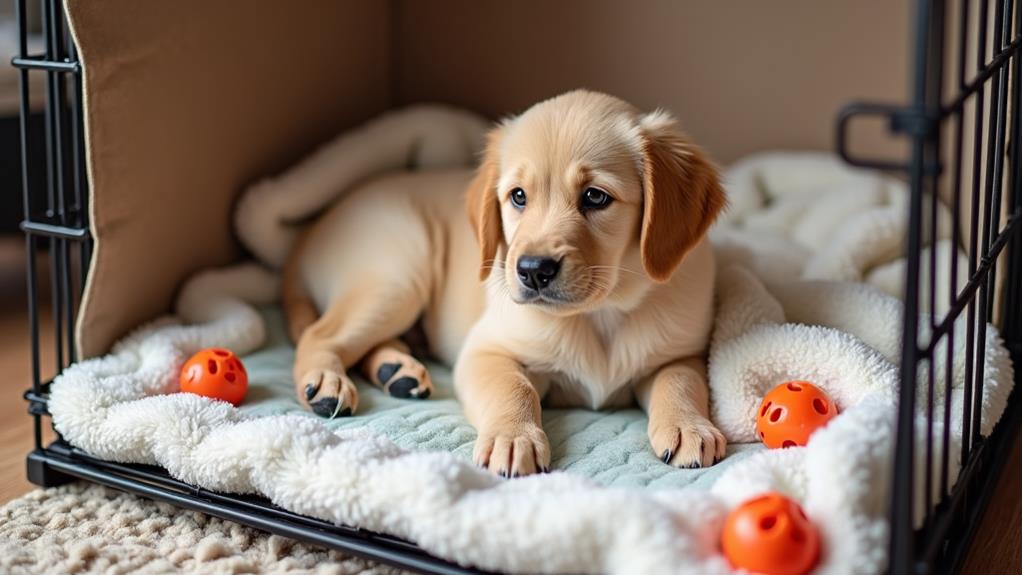
Inside the crate, add a layer of soft bedding or a cozy blanket. This extra touch provides warmth and makes the crate an inviting space for your puppy to rest. By focusing on these elements—a quiet location, den-like atmosphere, and soft bedding—you'll create a perfect nighttime haven that promotes your puppy's comfort and safety.
Managing Nighttime Anxiety
To effectively manage nighttime anxiety in puppies, consider placing their crate in your bedroom. This placement lets your puppy hear your breathing and feel your presence, providing a sense of security and reducing their nighttime anxiety. Ensuring the puppy crate is in a secure place away from high-traffic areas is essential, as it minimizes disturbances that could otherwise heighten their anxiety.
Incorporate comforting items in the crate, like a hot water bottle or items with familiar scents, to soothe your puppy and reduce feelings of loneliness. These small touches can create a calming environment that helps your puppy feel more at ease. It's also significant to gradually acclimate your puppy to the crate during the day. This familiarization increases their comfort level, making the crate a welcoming spot when it's bedtime.
Establishing a consistent nighttime routine is critical. Include final potty breaks and create a calm environment to signal to your puppy that it's time to settle down. This routine helps reduce nighttime anxiety, ensuring your puppy feels secure and relaxed. Following these steps can greatly improve your puppy's nighttime experience, promoting better sleep for both of you.
Feeding and Hydration Tips
While managing nighttime anxiety is vital for your puppy's comfort, feeding and hydration also play a significant role in guaranteeing restful nights. Establishing a consistent feeding schedule helps your puppy develop healthy habits and supports effective potty training. Feed your puppy their last meal a few hours before bedtime. This timing allows them to digest and relieve themselves fully, reducing the chance of nighttime accidents in their crate.
Avoid leaving food in the crate overnight. It prevents messes that could disrupt sleep and disturb the potty schedule. It's significant to view the crate as a safe place for rest, not a dining area. Limiting water access before bedtime is also fundamental. While you want to guarantee proper hydration throughout the day, too much water at night can lead to spills and frequent potty breaks.
Effective Crate Training Practices
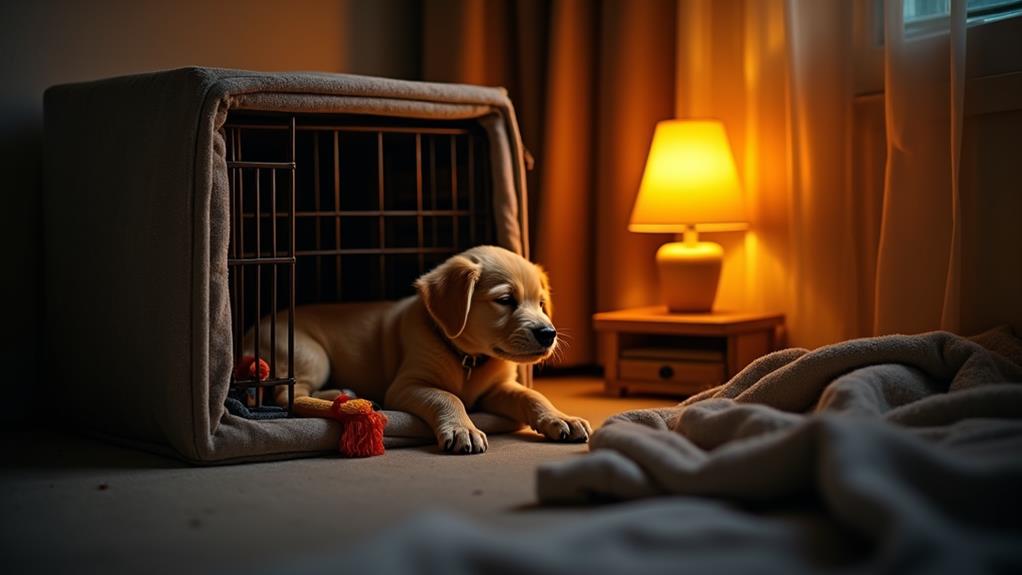
The puppy crate acts as a cozy den, providing your furry friend with comfort and security, especially during nighttime. Placing the crate in your bedroom can ease separation anxiety, as being near you offers reassurance. This proximity facilitates a smoother crate training process. Confirm the puppy crate is in a quiet area, away from high-traffic zones and direct sunlight. This placement promotes restful sleep and minimizes disturbances.
To start crate training, use positive reinforcement to create positive associations with the crate. Reward your puppy with treats and praise every time they enter the crate willingly. This reduces initial anxiety and encourages your puppy to view the crate as a safe space. Establish a consistent nighttime routine by taking your puppy outside for a final bathroom trip before bedtime. This reinforces the connection between outdoor bathroom breaks and crate time, helping your puppy settle more easily.
Monitor your puppy's behavior and adjust the crate environment as needed. Covering the crate with breathable fabric can create a den-like feel while still allowing visibility. This adjustment can improve your puppy's sense of security, making the crate a peaceful haven for them.