What Do You Do When a Puppy Pees in the Wrong Place?
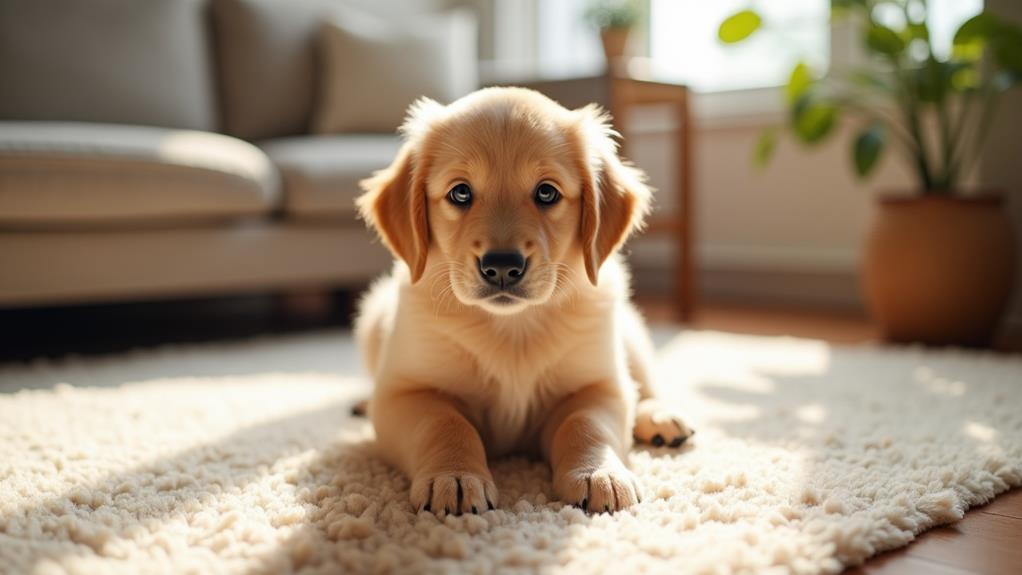
When your puppy pees in the wrong place, stay calm and don't scold them. Clean the area with an enzymatic cleaner to eliminate odors that might attract them back. Reinforce a consistent bathroom routine by taking them outside every couple of hours and after meals or naps. Supervise them closely, especially when indoors, to catch signals like circling or sniffing. Consider crate training or using baby gates to manage their freedom until they're reliably trained. Praise them with treats when they relieve themselves in the right spot. With these strategies, you'll be well on your way to better manage future accidents.
Establishing a Routine
Establishing a routine is vital for successful puppy potty training. By following a consistent schedule, your puppy learns when to expect bathroom breaks, reducing the likelihood of accidents. Start by taking your puppy outside every two hours, and always after waking, playing, or eating. This regularity teaches your puppy to hold its bladder and anticipate outdoor bathroom breaks. Remember, a puppy can generally hold its bladder for one hour per month of development, so adjust your schedule accordingly to prevent mishaps.
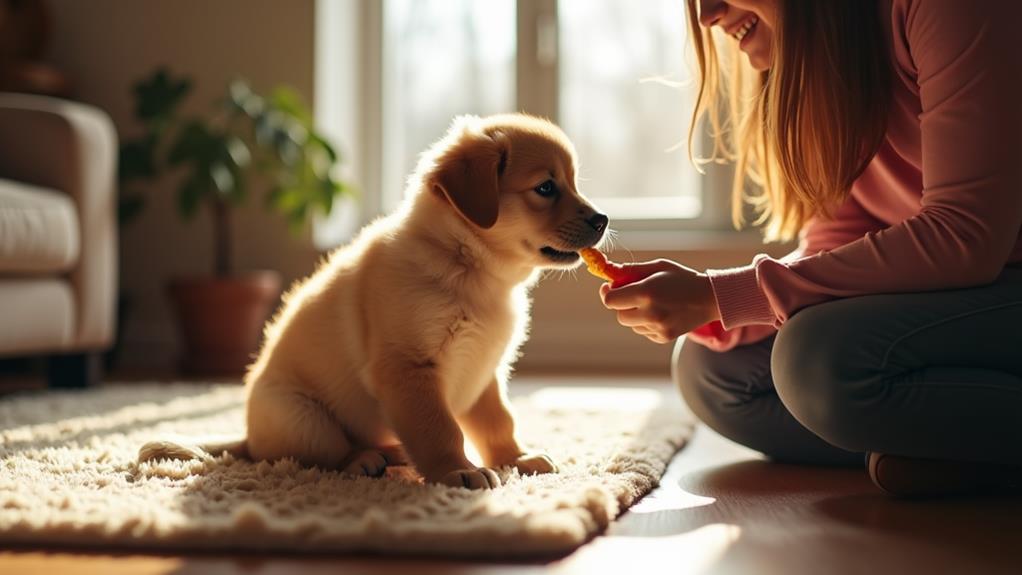
Designate a specific outdoor bathroom spot for your puppy. Consistently using the same location and command word helps your puppy associate the area with elimination. When your puppy successfully eliminates there, immediately reward them with praise or treats. This positive reinforcement strengthens the association between the outdoor spot and good behavior.
A regular feeding schedule also plays a significant role in potty training. Predictable meal times help you anticipate when your puppy will need to go outside, increasing the chances of successful bathroom breaks. By establishing a routine that includes consistent bathroom breaks, a designated outdoor spot, and a feeding schedule, you set your puppy up for potty training success.
Supervising Your Puppy
Keeping a close eye on your puppy is crucial to prevent indoor accidents and to quickly recognize when they need a bathroom break. Constant supervision helps you monitor their behavior and watch for signs that your puppy needs to go outside, like barking, scratching, or circling. By catching these cues early, you can take them outside promptly, reinforcing their outside potty routine.
When you can't actively train, tether your puppy with a six-foot leash. This allows you to keep them nearby, making it easier to notice when they might need a bathroom break. If you have a yard, keeping your puppy leashed can also help establish a consistent routine. This way, they learn that being in the yard means it's time to relieve themselves, reducing the chances of accidents inside.
Only consider allowing your puppy more freedom in the house once they've shown reliable house training. Granting too much freedom too soon can lead to setbacks in their training. By maintaining vigilant supervision, you're not only preventing accidents but also setting your puppy up for successful house training. With your guidance, they'll learn where and when it's appropriate to go, making life easier for both of you.
Confinement Strategies
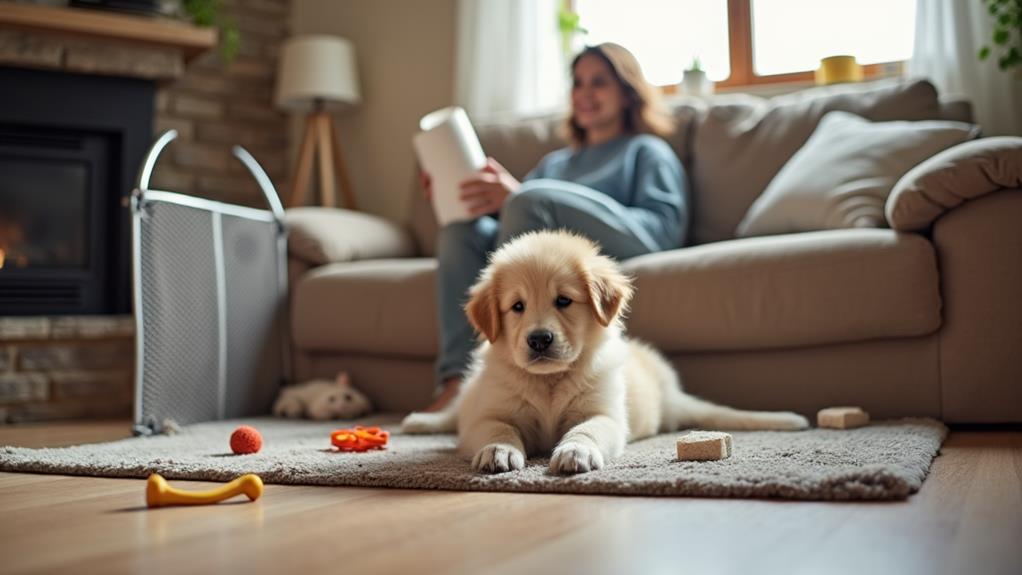
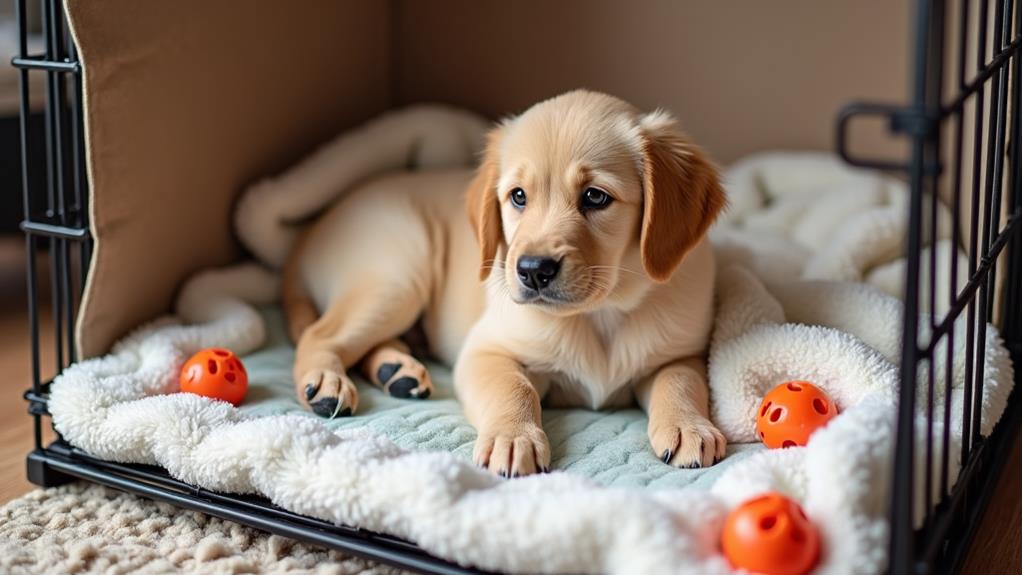
Confinement strategies are vital when a puppy pees in the wrong place. You need to confine your puppy to a small area where they can stand, lie down, and turn around. This helps them learn bladder control, minimizing accidents. Crate training is a humane and effective method for confinement. Most puppies naturally avoid soiling their sleeping area, so a crate becomes a helpful tool in your house training arsenal.
Consider using baby gates to restrict access to areas where you can't supervise your puppy directly. This not only keeps your puppy safe but also prevents them from having the opportunity to pee in undesignated spots. Remember, the goal is to guide your puppy to their designated bathroom area outside. After a period of confinement, take them directly to this spot to reinforce proper behavior.
Consistency is key. With regular confinement, your puppy will start to understand the routine, which is fundamental for successful house training. By controlling their environment and guiding them to the right location for bathroom breaks, you'll be well on your way to a well-trained puppy. Stick to this strategy, and you'll see progress in no time.
Handling Mistakes Calmly
While confinement strategies lay the groundwork for effective house training, handling mistakes calmly is just as important. When your puppy has an indoor accident, it's vital to respond without drama. Calmly redirecting your puppy outside to its designated bathroom spot immediately after the incident reinforces proper behavior. Avoid punishing them for accidents, as this can instill fear and anxiety, ultimately hindering the training process.
Instead, take a deep breath and focus on cleaning the soiled area thoroughly. Use enzymatic cleaners to remove odors that might encourage your puppy to repeat the behavior in the same spot. Consistent supervision and confining your puppy to a small area when not actively training can greatly reduce the likelihood of indoor accidents.
Remember, mistakes are a normal part of puppy training. Patience and persistence will lead to long-term success. Here are some reminders to help you stay calm and empathetic:
- 🐶 Puppies are learning; they need your guidance, not scolding.
- 🤖 A clean environment supports better habits.
- ⏳ Each accident is a step toward understanding.
- 🐕 Patience today builds trust tomorrow.
- 🎉 Celebrate small victories on the way to success.
Planning for Absence
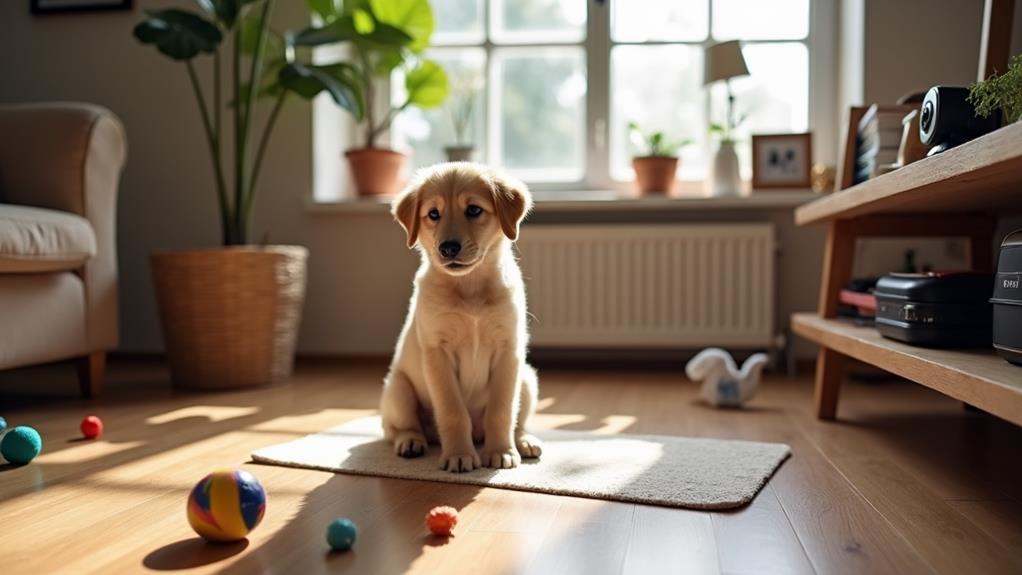
Leaving your puppy alone for extended periods can be challenging, but with proper planning, you can prevent indoor accidents. Initially, consider arranging for bathroom breaks during your absence. Neighbors or pet sitters can help guarantee your puppy gets the necessary potty breaks, reducing the risk of accidents in the house. It's vital to establish a consistent routine, so your puppy knows when to expect these breaks.
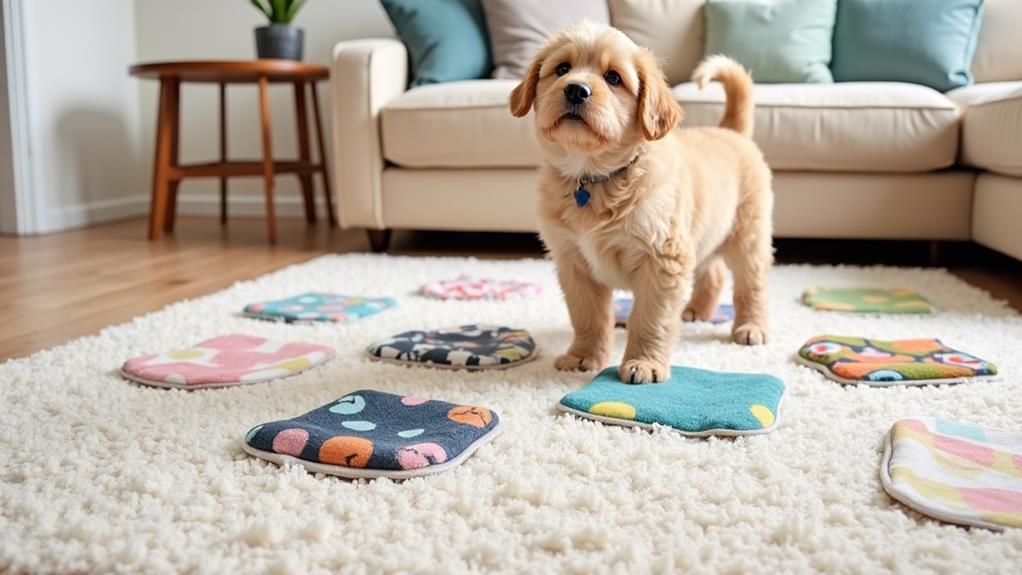
When planning for your absence, designate specific areas for elimination indoors. Use pee pads or newspapers to provide an appropriate option when you can't be home. To help your puppy recognize these designated areas, consider using soiled items from outdoor eliminations. This familiar scent will encourage them to eliminate in the correct spot.
If you're away frequently, you might want to think about adopting an older dog. They often have better bladder control and can model appropriate behavior for your puppy. This can be particularly helpful in reinforcing good habits.
Recognizing Puppy Signals
Spotting the signs that your puppy needs to go is vital in preventing accidents indoors. Puppies often give clear signals when they need to relieve themselves. You might notice your puppy sniffing the ground, circling, or even whining. These are your cues to act fast. Quickly taking your puppy outside when they show these signals can prevent messy accidents and reinforce good habits.
Consistency is key. Establish a predictable bathroom routine, especially after eating, drinking, waking, or playing. This helps you anticipate when your puppy needs to go, making it easier to manage their bathroom habits. Praise and treats for outdoor bathroom successes are powerful motivators. Your puppy will quickly learn that going outside brings rewards, encouraging them to repeat the behavior.
Close supervision is significant. Keeping an eye on your puppy while they're indoors helps you catch those pre-potty signals in time. Every accident avoided reinforces the idea that outside is the place to go. Remember, the more you supervise, the fewer accidents you'll face.
- 🐶 Sniffing around like they're on a mission
- 🔄 Circling as if chasing their tail
- 🐕 Whining for seemingly no reason
- 🚪 Standing by the door with anticipation
- 👀 Giving you that unmistakable "I need to go" look
Managing Indoor Freedom
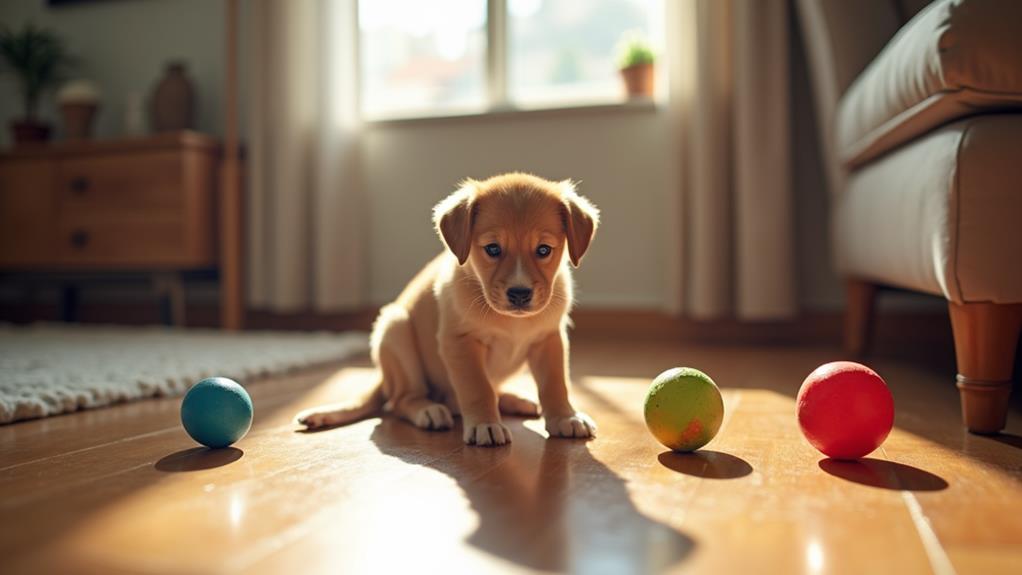
To effectively manage your puppy's indoor freedom, start by limiting their access to the entire house. When a puppy keeps peeing in the wrong places, it's essential to confine them to smaller areas using baby gates or by crate training your puppy. This approach not only makes them feel secure but also reduces the chance of indoor accidents. Limiting indoor freedom helps your puppy learn appropriate potty areas and can greatly reduce accidents.
As you manage indoor freedom, observe signs that your puppy needs a potty break, such as sniffing or circling. Quickly take them outside, reinforcing good habits with praise or treats when they eliminate in the right spot. Establishing a consistent routine for potty breaks will help your puppy understand when and where it's appropriate to go.
Once your puppy demonstrates reliable potty habits over a few weeks, gradually increase their freedom in the house. This incremental approach guarantees they don't become overwhelmed and revert to old habits. Remember, managing indoor freedom is a process that requires patience and attention. By consistently reinforcing good habits and limiting indoor freedom, you'll guide your puppy toward success and reduce accidents.
Addressing Medical Concerns
Addressing medical concerns is vital when your puppy continues to have accidents despite proper training. You should consult a veterinarian to rule out any medical issues like urinary tract infections or more serious health problems such as ectopic ureters. These conditions can affect your puppy's bladder control and lead to involuntary urination. Early intervention can help tackle these medical issues, ensuring your puppy's health and aiding in successful housetraining.
Regular veterinary check-ups are significant for identifying underlying health problems. They allow for timely treatment, preventing potential complications. Sometimes, accidents might be linked to mental health factors like separation anxiety. Behavioral assessments can provide insights and strategies to address these concerns, making your training efforts more effective.
Consider how addressing these concerns will impact both you and your puppy:
- Peace of mind knowing your puppy's health is prioritized.
- Joy from watching your puppy grow happy and confident.
- Relief as housetraining becomes smoother with fewer accidents.
- Trust in your veterinarian's guidance and expertise.
- Connection through understanding your puppy's needs and behaviors.
Understanding Submissive Urination
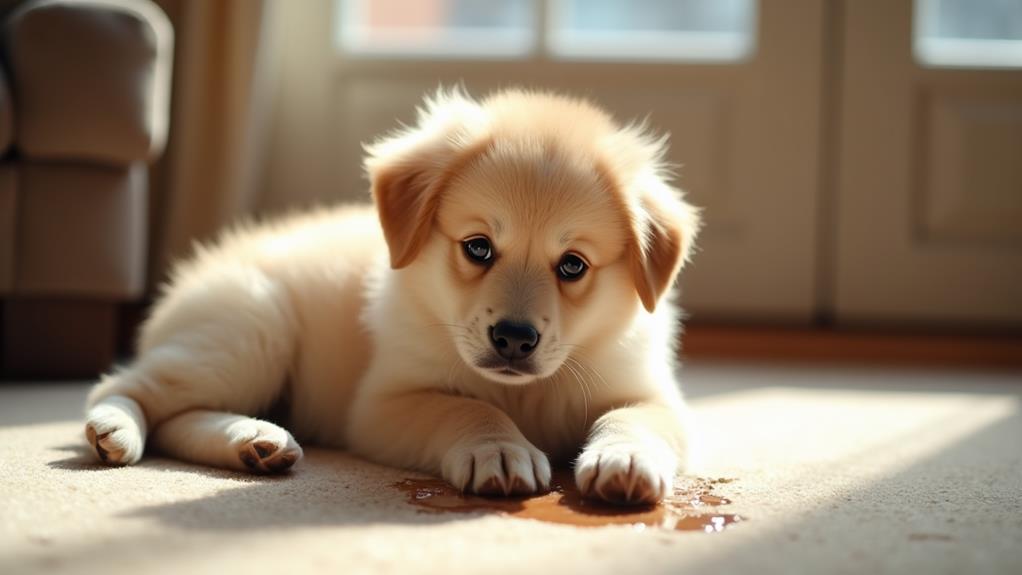
Your puppy's submissive urination can be perplexing, but it is a normal behavior often seen in young dogs. This type of urination is usually triggered by loud voices, greetings, or environmental disturbances. You might notice your puppy displaying postures like crouching, tail tucking, or even rolling over to show submission. It is vital to differentiate between submissive urination and excitement urination, as the latter occurs without the typical submissive postures.
Submissive urination can sometimes be linked to negative experiences. If your puppy has been punished or had stressful encounters, it might feel the need to submit by urinating. That's why it is important to adopt a positive training approach. Encouraging calm interactions and avoiding harsh corrections can help reduce these incidents. Using gentle encouragement and rewards will build your puppy's confidence and lessen the submissive behavior over time.
If you're struggling to manage submissive urination, consulting a veterinarian or a qualified behaviorist can provide valuable insights. They can help develop strategies tailored to your puppy's needs. By understanding the reasons behind this behavior and using a positive training approach, you can effectively manage and eventually reduce submissive urination in your young puppy.
Tackling Urine-Marking Behavior
In regard to dealing with urine-marking behavior, understanding its roots is essential. Often, puppies mark to claim territory or due to anxiety. Spaying or neutering your puppy early on can greatly reduce this behavior. To tackle urine-marking effectively, start by thoroughly cleaning soiled areas with enzymatic cleaners. These specialized products are important for eliminating odors that might encourage your puppy to mark the same spots again.
While monitoring your puppy, watch for signs like sniffing or lifting a leg. These behaviors give you a chance to intervene and redirect them outside. Creating an unattractive environment in previously marked areas is another helpful strategy. Use deterrent sprays or block access to these spots to discourage further marking.
If your puppy's urine-marking persists, consulting a veterinarian or animal behaviorist may be necessary to uncover any underlying issues. Professional guidance can provide you with extra training techniques tailored to your puppy's needs.
Consider the following when dealing with urine-marking:
- Feeling frustrated by constant cleanup
- Worrying about your home's cleanliness
- Wanting to understand your puppy's behavior
- Seeking peace of mind with professional help
- Aiming for a harmonious home environment
Addressing these issues effectively helps create a happier home for both you and your puppy.