How to Keep Puppy Pads in Place in Crate?
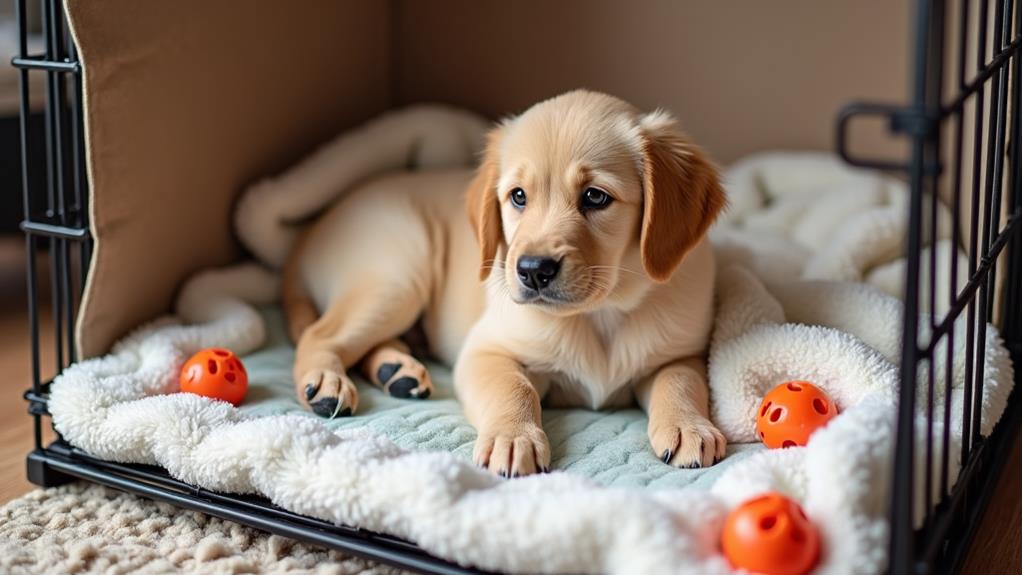
To keep puppy pads in place in a crate, start by choosing pads with non-slip backing or adhesive corners. Secure them further with strong adhesive tape, like duct tape, to keep edges flat against the crate floor. Using a rubber mat underneath or a specialized tray with raised edges can prevent sliding, offering extra stability. Try heavy-duty mats as a base for added protection. Regularly check pad positioning and adjust as necessary to accommodate your puppy's movements. Implementing these strategies will help maintain a tidy space for your puppy, making these solutions worth exploring further.
Choose the Right Puppy Pad
When choosing the right puppy pad, start by evaluating options with a non-slip backing or grip dots to keep them securely in place. These features are essential because they prevent the pads from sliding around in the crate, ensuring a stable and comfortable environment for your puppy. Puppy pads with non-slip backing can greatly reduce the hassle of constantly adjusting the pad every time your puppy moves or plays.
Another useful feature to look for is adhesive corners or sticky tabs. These adhesive elements make it easy to secure the puppy pads to the crate floor, providing an extra layer of security. This is particularly helpful if you have a very active puppy that tends to shift things around frequently. The adhesive corners help maintain the pad's position, so you don't have to worry about it bunching up or being displaced entirely.
Opt for larger-sized puppy pads that cover more surface area, as this also minimizes displacement. You might also want to explore washable and reusable puppy pads. These are heavier and more durable, which helps them stay in position during use, enhancing their practicality and longevity in your puppy care routine.
Utilize Non-Slip Materials
Keeping puppy pads securely in place can be a challenge, but utilizing non-slip materials can make a significant difference. You can start by selecting puppy pads with a slip-resistant backing, such as Gorilla Grip Washable Puppy Pads. These pads feature thousands of non-adhesive silicone grip dots that prevent sliding within the crate, offering a simple yet effective solution to keep them secure.
Another technique is to place a rubber mat or other non-slip material underneath the puppy pad. This extra layer of friction and stability helps minimize the chance of displacement, ensuring the pad stays put even if your puppy moves around. Specialized trays designed to hold puppy pads can also be beneficial. They often come with raised edges that not only contain messes but also keep the pads from being easily moved or chewed.
Moreover, consider using heavy-duty waterproof mats designed for pets. These mats provide a stable base while protecting the crate floor, further preventing the puppy pad from shifting. By incorporating these non-slip solutions, you can maintain a cleaner and more comfortable environment for your puppy, ensuring the pads stay securely in place.
Secure With Adhesive Tape
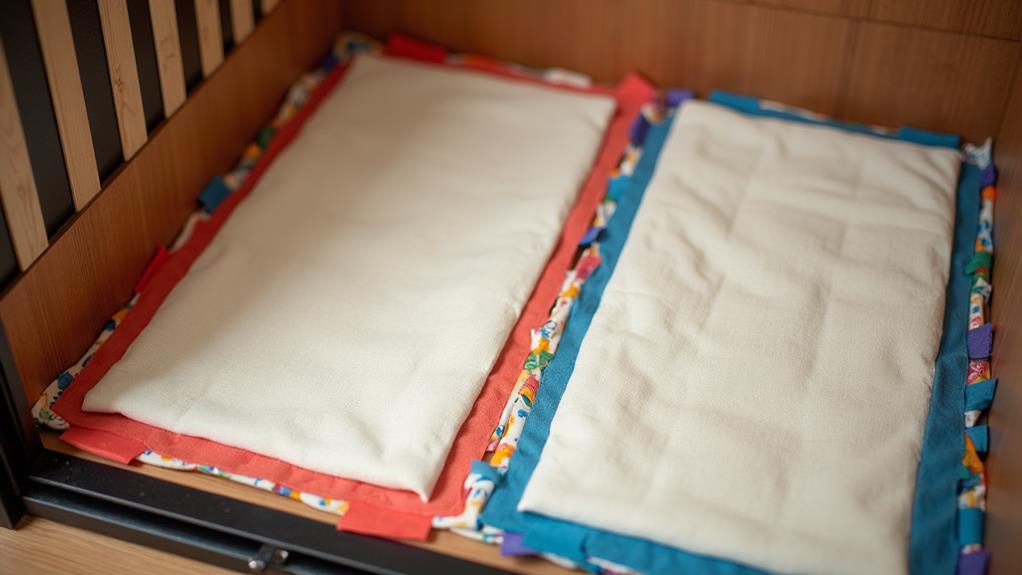
Securing puppy pads with adhesive tape can be a practical and straightforward solution to keep them in place. Using strong adhesive tape like duct tape or painter's tape, you can firmly attach the edges of the puppy pads to the crate floor. This prevents the pads from shifting or bunching up when your puppy moves around. It's essential to make sure that the tape adheres well to both the pad and the crate surface, providing a stable setup that can withstand your pup's activity.
Different dogs may react differently to adhesives, so you might need to try a few types of tape to find what works best. You could even use a combination of tapes for added security. Regularly check the effectiveness of the tape, as some dogs might be tempted to chew or pull at it. If you notice signs of wear or if the tape's grip is weakening, be ready to replace or adjust it.
For even more stability, you can use a specialized tray to hold the puppy pads in place. This method, combined with adhesive tape, can offer a dependable solution to keep your puppy's crate clean and tidy.
Consider Pad Holders
While adhesive tape can be a practical way to keep puppy pads in place, pad holders offer another effective solution worth considering. These specialized tray holders are designed to secure puppy pads, preventing them from moving or getting displaced during use. With raised edges, they create a boundary that makes it challenging for puppies to shred or remove the pads, ensuring a mess-free environment.
Pad holders are readily available at pet supply stores like PetSmart, typically priced at around $8.99, making them an affordable option for maintaining pad placement. By using a tray, you encourage your puppy to step onto the holder, which can positively influence their potty routine. This association can improve your puppy's training experience, as they learn to recognize the holder as their designated potty spot.
You might find that experimenting with different types of pad holders helps identify the best fit for your puppy's behavior and preferences. Each puppy is unique, and what works for one may not work for another. Choosing the right pad holder can greatly enhance the training experience, providing a stable and reliable setup that supports effective potty training.
Monitor and Adjust Regularly
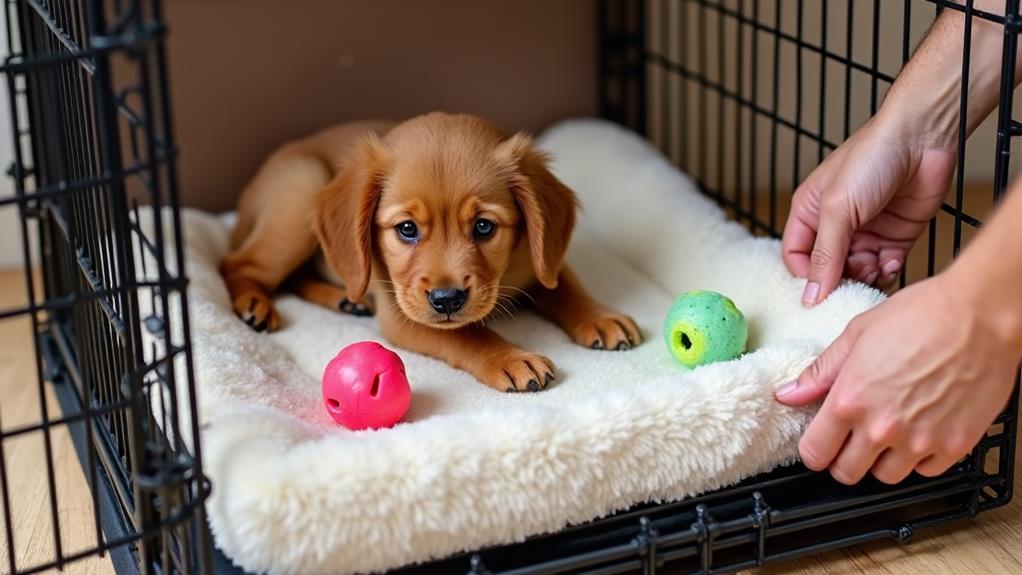
Regular monitoring and adjustment of your puppy's pads are vital for effective training. Puppies are curious and active, often shifting their environment, including those carefully placed puppy pads. To guarantee they stay secure, routinely check the positioning of the pads in the crate. It's critical they remain in place to serve their purpose.
You can use specialized trays that are designed to hold puppy pads firmly. These trays help prevent the pads from sliding when your pup moves around, encouraging consistent usage. Another simple method is using strong, chew-resistant tape like duct tape. Secure the edges of the puppy pads to the crate floor, reducing the chances of your pup moving them around.
Experimenting with different configurations can also be beneficial. Try overlapping multiple pads to create a larger area; this might be less likely to be disturbed by your puppy's activities. Keep an eye on your puppy's behavior and be ready to adjust the pad placement or type as needed. Confirm the pads are easily accessible so your puppy can successfully use them. By staying vigilant and making necessary adjustments, you'll support your puppy's potty training process effectively.
Training and Behavioral Tips
Training your puppy to use pads effectively requires patience and consistency. Start by providing a designated area within the crate, using a specialized tray or pad holder with raised edges. These tools help define where your puppy should go, reducing displacement and encouraging them to use the pad. As you train, monitor your puppy's behavior closely. If they start chewing or playing with the pads, it could be a sign of boredom or curiosity. Adjust the setup by reinforcing the pads with durable tape like duct tape, guaranteeing they stay in place despite your puppy's antics.
Reinforce positive behavior by praising your puppy every time they use the pad correctly. Consistent training and rewarding good behavior will help establish strong habits, minimizing accidents over time. Make certain you remain vigilant, keeping an eye out for any changes in your puppy's behavior. If you notice persistent issues, consider adjusting the location of the pads or the crate setup. This proactive approach guarantees your puppy stays engaged and learns effectively. Remember, your persistence in monitoring and reinforcing positive behavior will pay off, leading to a well-trained and happy puppy.