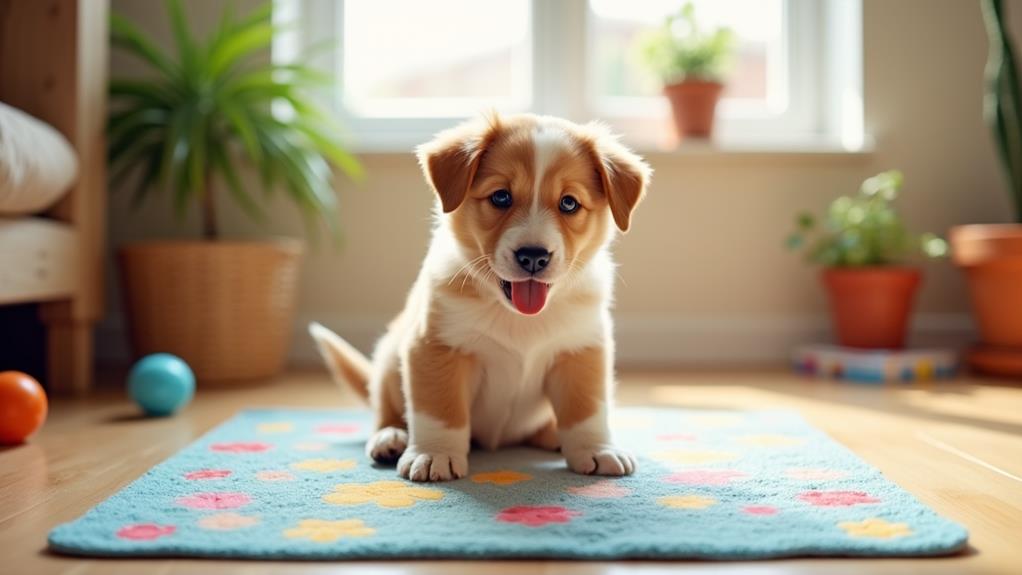
How to Keep Puppy Pads in Place?
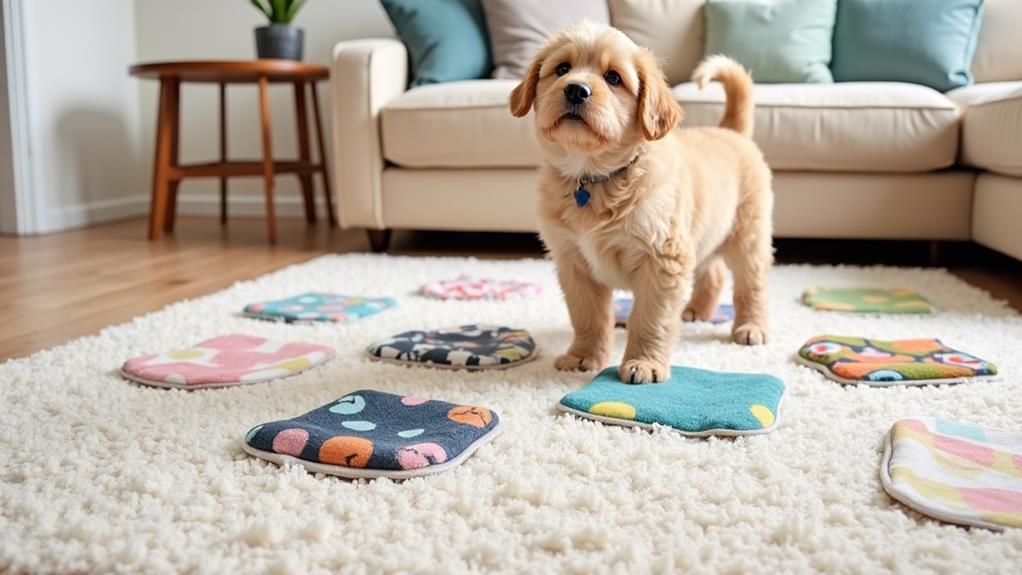
To keep puppy pads in place, opt for pad holders or trays with raised edges to prevent sliding and spills. You can tape the pads down using strong adhesive like duct or painter's tape, but verify surfaces are clean and dry for the best grip. Choose larger pads to increase coverage and reduce misses. DIY solutions, such as adding weighted hems or using rubberized mats underneath, can also provide stability. Consistent training and monitoring will further help your pup use the pads correctly. Investigate different methods to find what works best for you and your furry friend.
Understanding Puppy Pad Challenges
Puppy pads, while convenient, come with their own set of challenges that you need to be aware of. For starters, these pee pads can easily slip or get displaced, especially if you have small dogs who love to play and investigate. This often leads to unwanted messes and accidents around your home. You might think taping the pads down would solve this problem, but many find that traditional tape solutions just don't cut it. Dogs tend to chew or pull at the edges, making it difficult to keep the pad in place.
To tackle this issue, some pet owners turn to pad holders or trays. These are designed to help keep the pads secured, but their effectiveness can vary. A pad holder might work wonders for one dog but fail to deter another, depending on the dog's behavior and the design of the holder. Larger pads, measuring 21 by 21 inches or more, can offer more surface area, reducing the chances of your pup missing the mark. Consistent training and monitoring play significant roles in ensuring that your furry friend uses the pee pads correctly and keeps them where they belong.
Choosing the Right Pad Holder
In the matter of choosing the right pad holder, not all options are created equal. You want a pad holder that fits the dimensions of your puppy pads perfectly. For instance, the Simple Solution Dog Training Pad Holder works well with pads 21 by 21 inches or larger, ensuring a snug fit to keep the pad from shifting. Another great option is the Skywin Dog Puppy Pad Holder Tray. Designed for 24 x 24 inches pads, it features raised edges that help contain spills and prevent leakage onto your floors, making it an excellent choice for keeping pads in place.
It's crucial to evaluate materials when selecting a pad holder. Anti-slip materials improve stability, minimizing the chance of the holder sliding during use. This feature is particularly beneficial for pets that may struggle with mobility. You should also look for options that are easy to clean. Holders made from silicone or those with wipe-clean surfaces help maintain hygiene and reduce cleanup time.
Securing Pads With Tape
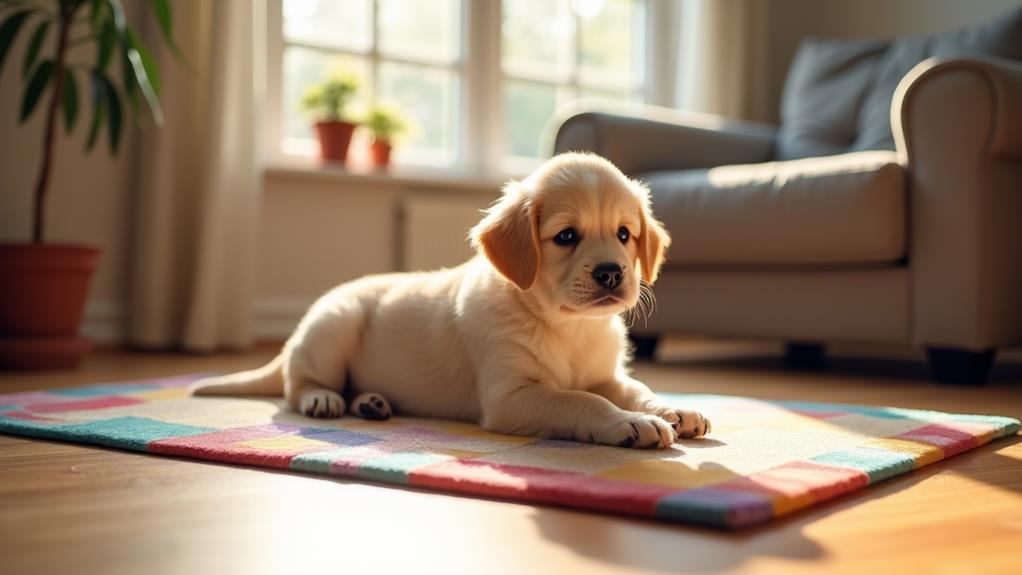
In regard to keeping puppy pads in place, securing them with tape can be an effective solution. You'll want to use strong adhesive options like duct tape or painter's tape to guarantee the edges of the pad stay fixed to the floor. These types of tape are durable and can withstand your puppy's chewing and movement. Before you begin, make certain the surface is clean and dry, as this will enhance the tape's adhesion and prevent any slipping.
Cut the tape into manageable lengths to create anchors at each corner of the pad. This method helps secure the edge of the pad and keeps it firmly in place during use. For added security, consider layering multiple strips of tape along the edges of the pad. This prevents any lifting or sliding, even if your puppy is particularly active.
Regularly check the tape to confirm it remains effective. You'll want to replace it as needed, especially if you notice your puppy starting to pull or chew on the pad. These steps will help maintain a secure and stable environment for your puppy's needs while keeping your space tidy.
Exploring Alternative Holders
With regard to keeping puppy pads in place, exploring alternative holders can offer a more secure solution. Specialized trays, like the Skywin Dog Puppy Pad Holder Tray, are great for improving stability. These trays are easy to use and feature raised edges to prevent leaks, ensuring that spills don't reach your floors. The silicone material provides a snug fit, reducing the risk of the pad being torn or displaced by your pet's movements. This is especially helpful for dogs that tend to move around a lot or play with their pads.
For those who travel often or need flexibility, portable options such as foldable holders are ideal. These can be transported easily, allowing you to set up a consistent potty training environment wherever you go. They provide the stability you need without the hassle of carrying bulky equipment. Some holders even come with anti-slip materials, making them perfect for active pets.
Community recommendations suggest that the effectiveness of these holders can depend on your dog's behavior. It's worth trying different types to see which provides the best stability and pad security for your furry friend. You'll find that a little experimentation can lead to a cleaner, more efficient potty area.
Community Tips and Tricks
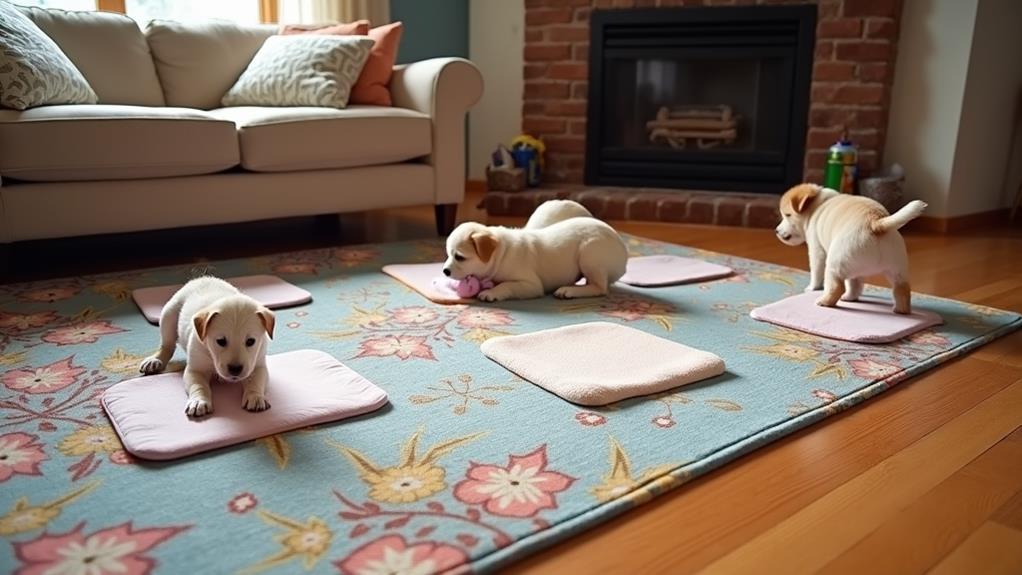
Engaging with the community can be a wealth of tips and tricks for keeping puppy pads in place. Many pet owners have shared that using specialized holders or trays with raised edges is effective in preventing spills and leaks. This is essential if you need to use pads frequently. These holders guarantee that the pee pad stays put, providing a cleaner environment for your pup.
Experimenting with tape is another popular suggestion. Some members have found success with duct tape or painter's tape to anchor the pads to the floor. However, if your pup is prone to chewing, you'll want to monitor closely or investigate other options like reusable pads with secure backing.
For those dealing with pets prone to dragging or playing with their training pads, overlapping two pads to create a larger surface area is a helpful tip. This reduces the chances of misses and displacement. Larger pads can also be a game-changer.
Don't underestimate the value of sharing experiences on forums. Hearing what's worked for others can guide you to the best methods and products, making your training process smoother and more efficient.
Training Puppies Effectively
In regard to training puppies effectively, establishing a consistent schedule is key. You should plan regular potty breaks to help your puppy understand when and where to go. This routine will reinforce their schedule and reduce accidents. Use positive reinforcement by giving treats and praise right after your puppy uses the potty pads. This encourages the behavior to repeat. It's helpful to introduce verbal cues like "go potty" so your puppy can associate the command with the action, which aids effective communication.
Watch your puppy's behavior closely for signs they need to go, such as sniffing or circling. When you notice these signs, guide them to the potty pads promptly. This proactive approach helps prevent accidents and reinforces using the pads. For male puppies, consider using pee baffles or magnetic holders to protect walls from splatter and guarantee the pads stay in place. These tools are especially useful if your puppy tends to knock the pads around. With consistent practice and patience, you'll find that your puppy learns to use the potty pads effectively, making the training process smoother for both of you.
Managing Pad Maintenance
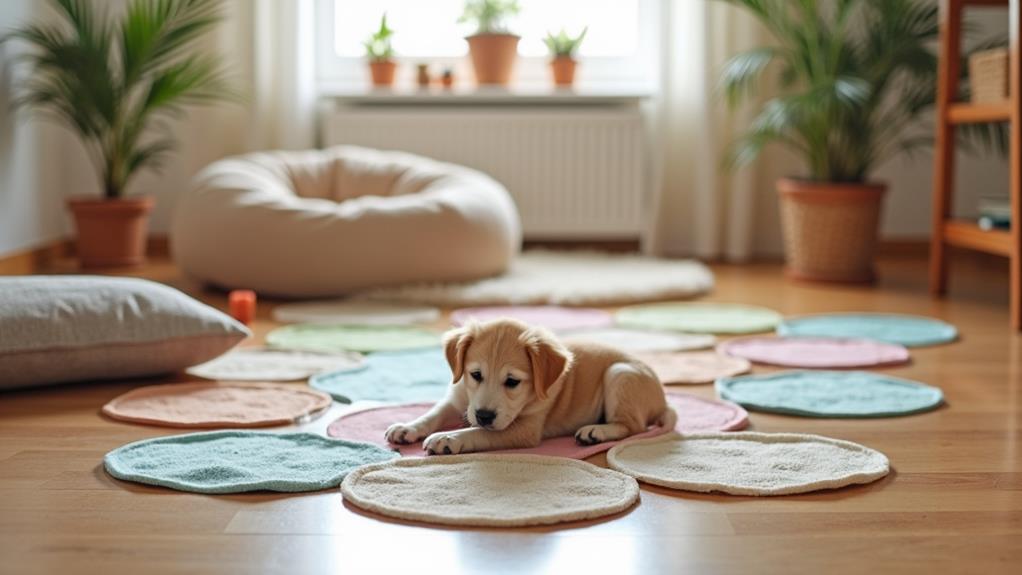
Managing pad maintenance is crucial for ensuring your puppy continues using them reliably. Regularly change the potty pad after each use to maintain cleanliness and encourage consistent usage. Puppies prefer a fresh pad, much like a clean litter box. To manage your puppy's potty area efficiently, consider these key points:
- Use a pad holder or tray: Opt for one with raised edges to contain messes and prevent pads from shifting or being displaced.
- Ensure the right pad size: Larger pads reduce the risk of accidents spilling over the edges.
- Clean with enzymatic cleaners: This eliminates odors and makes the area more inviting for your puppy.
For easy storage, select pads that fit your space while leaving room for a pad holder. Consider using adhesive or anti-slip materials on the bottom of the pad holder to help it stay in place, especially on slippery surfaces. This prevents movement during use, ensuring a secure potty area for your pup.
Considering DIY Solutions
After mastering pad maintenance, you might want to investigate some DIY solutions to keep those puppy pads securely in place. You don't need to spend a lot to create effective solutions. Start by crafting a DIY holder frame using PVC pipes. This keeps the pad in place and the edges raised, containing any mess. It's a simple and inexpensive project that makes life much easier for you.
Another option is to use Velcro strips combined with adhesive tape. Secure these onto the underside of the pad, anchoring it firmly to the floor. This minimizes the risk of it being dragged or displaced by your energetic pup. If you're handy with sewing, consider adding a weighted hem around the pad's edges. This will anchor it and prevent sliding when your puppy steps onto it.
For a sleek solution, design a fabric cover with elastic edges. It fits snugly over the puppy pad, allowing for easy changes while keeping everything in place. Ultimately, place a rubberized mat underneath the pad. This provides extra grip and prevents slipping on smooth surfaces like tile or hardwood floors. With these DIY solutions, maintaining your puppy pads becomes much easier.