How Do You Train a Puppy to Poop in One Place?
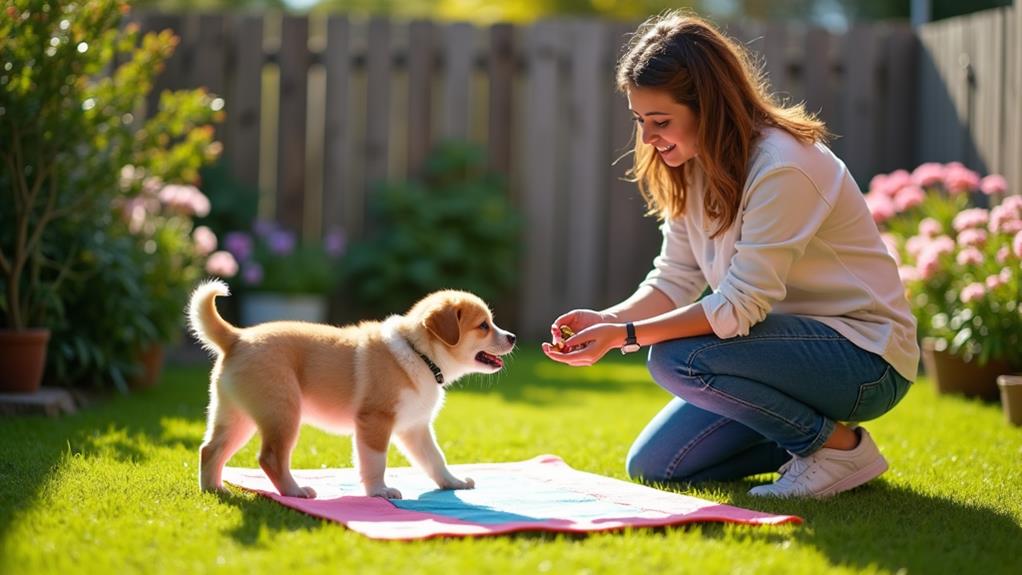
To train your puppy to poop in one place, start by choosing a quiet, low-traffic area in your yard that's easy to clean, like grass or mulch. Keep it clean to encourage use. Establish a routine by taking your puppy to this spot right after meals, playtime, and waking up. Use a leash for guidance and reward them with treats and praise immediately after they go. Consistency is key; use a specific command like "go potty" to help them learn. Be patient and avoid punishment. Maintain cleanliness and watch for progress. Uncover the full process with a bit more exploration.
Choosing the Potty Spot
Choosing the right potty spot for your puppy is vital for successful training. Start by designating a low-traffic area in your yard that's both comfortable and easily accessible for your furry friend. Look for a spot with soft, absorbent materials like grass or mulch, which provide comfort and make cleanup easier. Choose a specific spot away from high foot traffic to minimize distractions and encourage your dog to use it consistently.
It's important to maintain cleanliness in this designated area. Clean it up quickly by regularly removing waste, which helps prevent aversion and guarantees your puppy associates the spot with a positive experience. By doing so, your puppy will feel encouraged to return to this comfortable, familiar place. Observe your puppy's existing preferences and habits; if they naturally gravitate toward a certain area, consider using it as the designated potty spot.
Allow enough space, ideally five times your puppy's length, so they can sniff around and feel comfortable before eliminating. Positive reinforcement, like praise or treats, can further encourage your dog to use the designated spot. With consistent effort, your puppy will soon master the art of using their potty spot.
Establishing a Routine
To successfully train your puppy to use their designated potty spot, it's crucial to establish a consistent routine. Start by setting a bathroom schedule that involves taking your dog outside after meals, playtime, and waking up. This consistency reinforces the habit of going in one spot. For puppies, take them out every two hours to help them develop regular bathroom habits.
Use a leash to guide your puppy to the designated spot each time. This helps them associate that specific area with the act of relieving themselves. Pay close attention to your puppy's behavior for signs they need to go, such as circling or whining. When you notice these signs, immediately take them to the designated spot, reinforcing the connection between their urge and the location.
Patience is key in this process. It can take up to six weeks for your puppy to fully adapt to a consistent potty schedule. Stay persistent and don't get discouraged if progress seems slow. Over time, your puppy will learn to anticipate their bathroom breaks and understand the significance of consistency in using their designated spot. With dedication and patience, you'll successfully potty train your puppy.
Using Positive Reinforcement
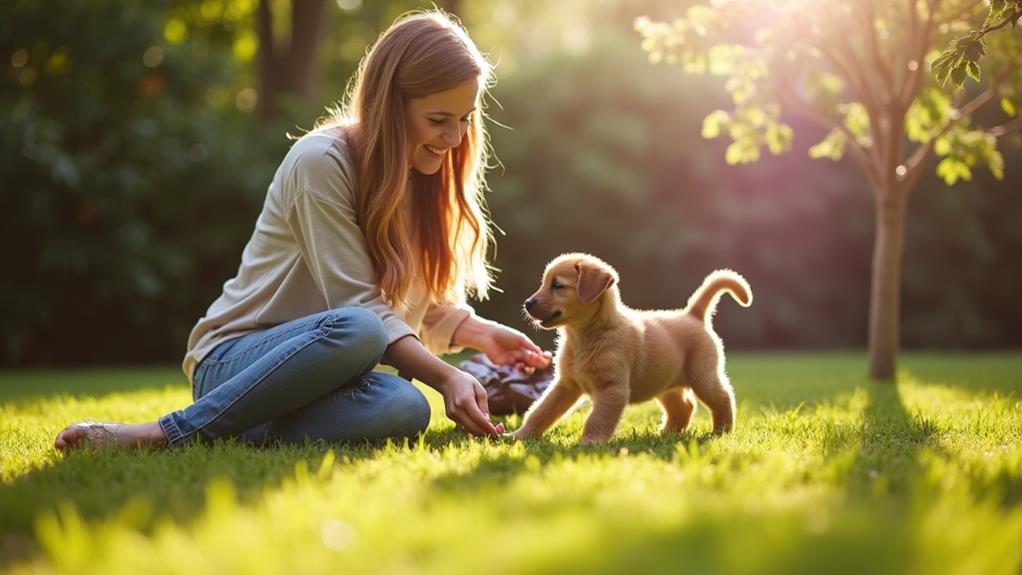
Positive reinforcement transforms the sometimes challenging task of potty training into a rewarding experience for both you and your puppy. By immediately rewarding your puppy with treats or verbal praise each time it successfully eliminates in the designated area, you reinforce the desired behavior. Consistency in rewards is key. Here's how you can effectively use positive reinforcement:
- Reward Appropriately: Always offer a treat or verbal praise whenever your puppy uses the correct spot. This strengthens their understanding of what's expected.
- Use Commands: Incorporate specific commands like "go potty," so your puppy associates the action with the command, making potty training smoother.
- Increase Time Between Rewards: As your puppy becomes more reliable, gradually extend the time between rewards to encourage independence while still reinforcing the behavior.
- Be Patient: Understand that it might take several weeks for your puppy to fully associate the designated area with positive outcomes. Patience and persistence are essential.
These training methods create a positive environment, making the process of potty training less stressful and more successful. Remember, each successful elimination in the designated area is a step toward routine, thanks to your consistency and patience.
Implementing Cue Words
Implementing cue words is a powerful way to streamline your puppy's potty training process. Start by choosing a simple and consistent cue word, like "go potty," to signal it's time for your dog to go to the designated area. Use this phrase every time you take your puppy to the spot. Repetition helps them associate the cue with the action of eliminating. Pay close attention to your puppy's body language; it can indicate when they're ready to go. Consistency is key, so always use the cue word during these moments.
Be patient, as it might take a bit of time for your puppy to fully connect the cue with the desired behavior. When your puppy successfully eliminates in the designated area, immediately offer praise and a treat. This immediate reward reinforces their understanding of the command and encourages them to repeat the behavior. Gradually, you can introduce the cue in different situations, such as after meals or playtime, to strengthen the connection between the cue and potty time. Remember, patience and consistency are your best tools in teaching this significant part of your puppy's routine.
Handling Training Challenges
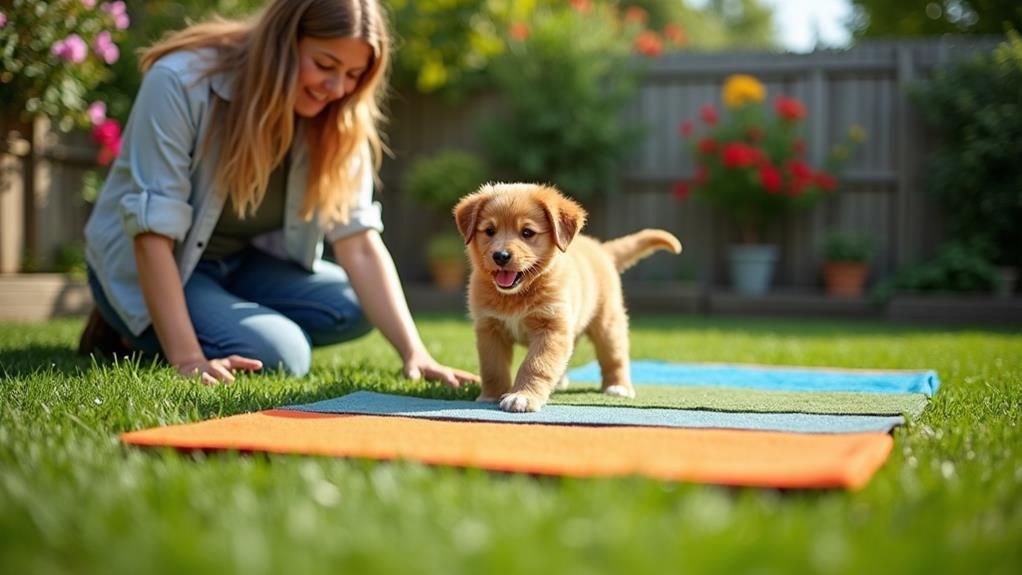
While cue words form the foundation of effective potty training, you might encounter a few bumps along the path. Training your dog to poop in one designated spot can present challenges, but with patience and consistent effort, you can overcome them. Here's how to tackle some common issues:
- Leash Training: If your puppy consistently avoids the designated spot, use a leash to guide them. This helps reinforce the right area for potty breaks until they naturally associate it with where they need to relieve themselves.
- Accidents: Don't fret if accidents happen. Stay calm and avoid punishment, as this can confuse your puppy. Instead, clean the area thoroughly to prevent repeat behavior and keep the area clean for future training sessions.
- Pay Attention: Keep an eye out for signs your puppy needs to relieve themselves, like circling or sniffing. Responding promptly can prevent accidents in undesired locations and encourage them to use the designated spot.
- Positive Environment: Some puppies may be hesitant to eliminate in non-grassy areas. Gradually introduce them to the designated spot while maintaining a positive environment to ease their adjustment.
Stay patient and consistent to make this expedition smoother for both you and your puppy.
Maintaining Cleanliness
To guarantee your puppy consistently uses the designated potty area, maintaining cleanliness is key. You should regularly clean the designated area to prevent odors that might discourage your puppy from returning. Keeping it clean not only maintains hygiene but also encourages your puppy to continue using the spot. During the training phase, leave one pile of poop in the designated area to help your puppy recognize the scent, reinforcing the idea that this is the intended potty location.
It's essential to avoid excessive waste accumulation. If the designated area becomes too dirty, your puppy might get deterred and start having accidents outside the designated area. To combat lingering odors that could lead to confusion, water the designated area periodically. This will wash away any remaining scents that might discourage your puppy from using the spot again.
If your puppy has accidents outside the designated area, promptly clean them up. This action helps prevent any confusion about where they should go and reinforces the intended potty behavior. By keeping the designated potty area clean and tidy, you'll encourage your puppy to consistently use the right spot, making potty training more successful.