How Do You Teach a Puppy to Place?
To teach your puppy the 'place' command, start by introducing a comfortable mat or bed as their designated spot. Use high-value treats and gentle guidance with a leash if necessary, to encourage them onto the spot. Mark the correct behavior with a clicker or verbal praise. Practice a release cue so they only leave when you command. Gradually introduce distance, duration, and distractions to improve the command's reliability. Remember to train in short, focused sessions in quiet environments initially. Consistent practice will reduce problem behaviors and boost their adaptability. Uncover more tips on building a calm, well-behaved pup.
Understanding the Place Command
The Place Command is like a cozy corner for your puppy, teaching them to settle in a designated spot and stay calm until you give the release cue. It's a foundational command in dog training that helps establish boundaries and promotes calm behavior. By consistently using the Place Command, you teach your dog to stay put, making it easier for them to understand expectations and reinforce desired behaviors.
This command is essential for acclimating your puppy to real-world situations. Imagine your dog remaining composed despite distractions like a doorbell ringing or guests arriving. Training your puppy to focus on the Place Command, even when excited, helps manage their behavior effectively. Incorporating this command into daily routines provides a safe space for your puppy, reducing problem behaviors such as jumping on guests or begging during mealtimes.
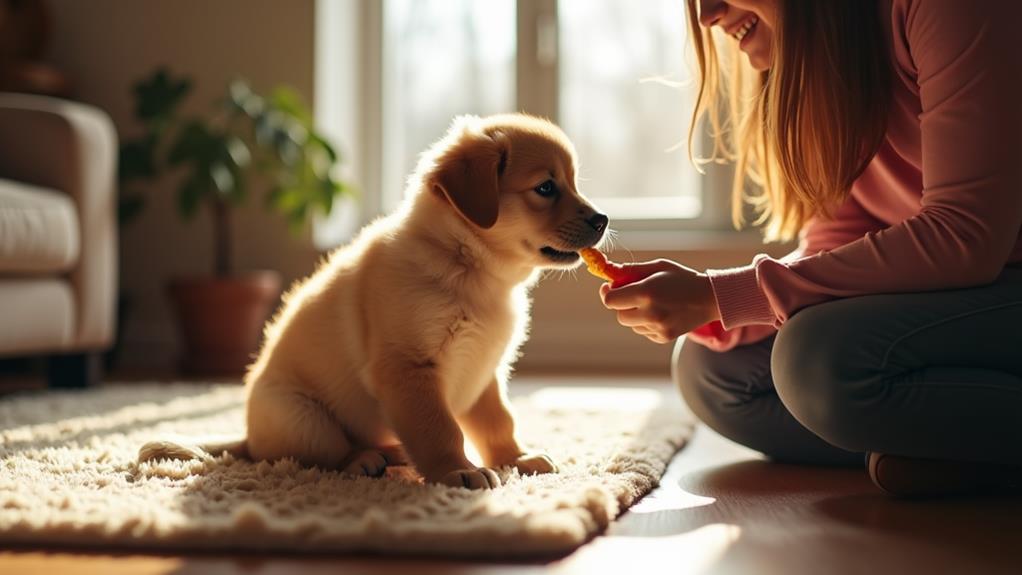
Positive reinforcement plays an important role in teaching the Place Command. Use treats and praise to reward your puppy, creating a positive association with the command. This makes it a rewarding experience for your puppy, ensuring they're keen to comply. With patience and consistency, you'll see your puppy thrive in their new, calm environment.
Essential Tools for Training
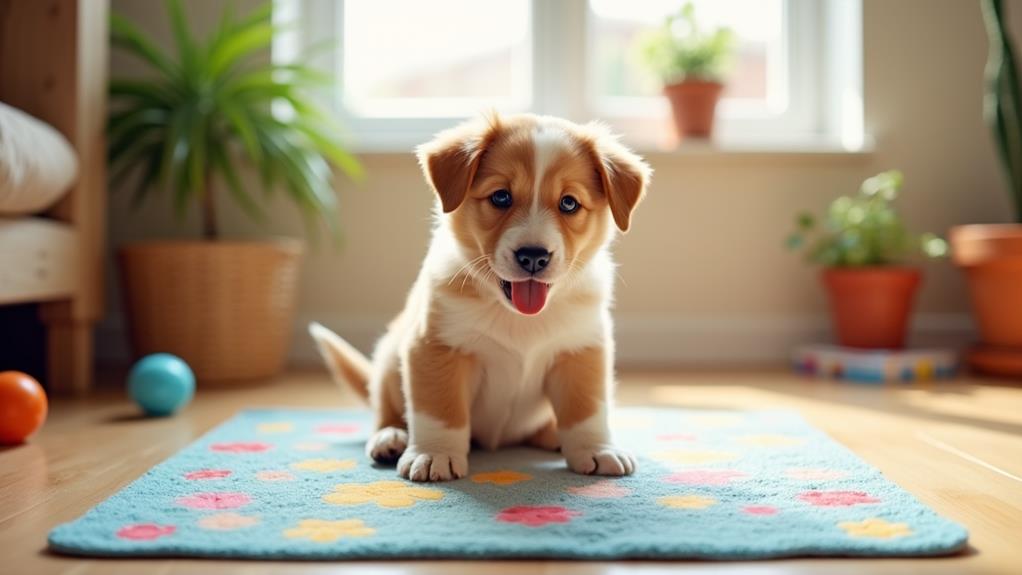
To effectively teach your puppy the Place Command, you'll need a few vital tools that streamline the training process. Start with a non-slip mat, blanket, or dog bed. This provides a clear boundary for your puppy, helping them understand the designated spot where they should settle. High-value treats are important for positive reinforcement. These tasty rewards encourage your puppy to associate the Place command with good outcomes, making them more enthusiastic to comply.
A leash is another important tool. It aids in guiding your puppy to the designated spot, especially in the early stages of training. This keeps them focused and reduces distractions during training sessions. To reinforce correct behavior immediately, use a clicker or a verbal marker like "Good!" when your puppy successfully goes to their place.
Consistency is key in this process. Use the same commands and tools in every training session to help your puppy generalize the behavior across different environments. By sticking to a routine, you'll make it easier for your puppy to understand what's expected, ultimately leading to a well-trained and obedient companion. With these tools, you're well on your way to success.
Step-by-Step Training Guide
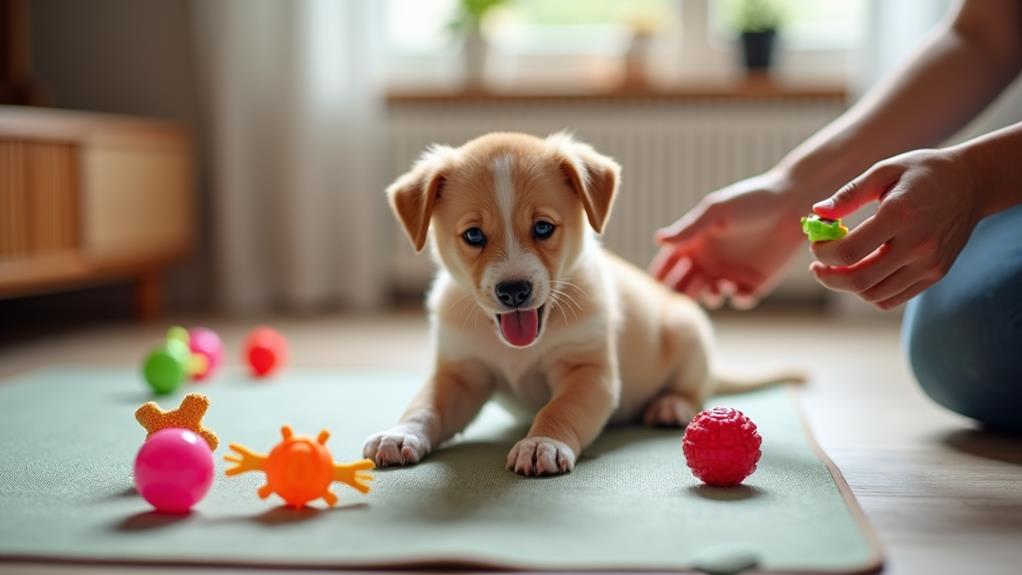
Armed with the right tools, you're ready to commence on the adventure of teaching your puppy the Place Command. Start by introducing a comfortable dog bed or mat as the designated "place" where your puppy will go. Use treats to guide them onto it, marking this good behavior with a cheerful "Good!" and rewarding your dog promptly.
Here's a step-by-step guide to get started:
- Go to their Place: Use the Place Cue to instruct your puppy to move to the dog bed. Guide them with treats if necessary, and reinforce with a verbal cue.
- Use Leash Pressure: Attach a leash to gently guide your puppy onto the mat if they're hesitant. This helps maintain control and guarantees they understand where to go.
- Introduce the Release Cue: Once your puppy is comfortable staying on the mat, teach your dog the release cue, allowing them to leave only when commanded.
- Practice in Different Rooms: To guarantee they generalize the command, practice several times in multiple locations. This will aid your puppy in maintaining focus and good behavior amidst diverse environments.
Gradually increase the complexity and let them enjoy the learning process!
Enhancing Training With Challenges
Building on your puppy's understanding of the Place command, it's time to introduce challenges that will improve their training. Start by incorporating the 3Ds: distance, duration, and distraction. Practice the place command regularly, focusing on one element at a time. Gradually increase the distance you move away, extend the duration your puppy stays in place, and introduce distractions like toys or noises. This approach will help your puppy maintain focus despite external stimuli.
Use positive reinforcement consistently. Reward your puppy with treats or praise when they successfully stay in place despite these challenges. This helps build confidence and reliability in their response to the Place command. As you practice in different environments, your puppy will begin to generalize the Place command, responding appropriately in different settings.
Always monitor the puppy's comfort level. If they seem overwhelmed or frustrated, reduce the difficulty and allow for breaks. Adjust the training challenges based on their progress, ensuring a balanced approach that encourages growth without causing stress. By incrementally raising the stakes, you'll not only improve their training but also foster a strong bond built on trust and understanding.
Practical Applications of Place
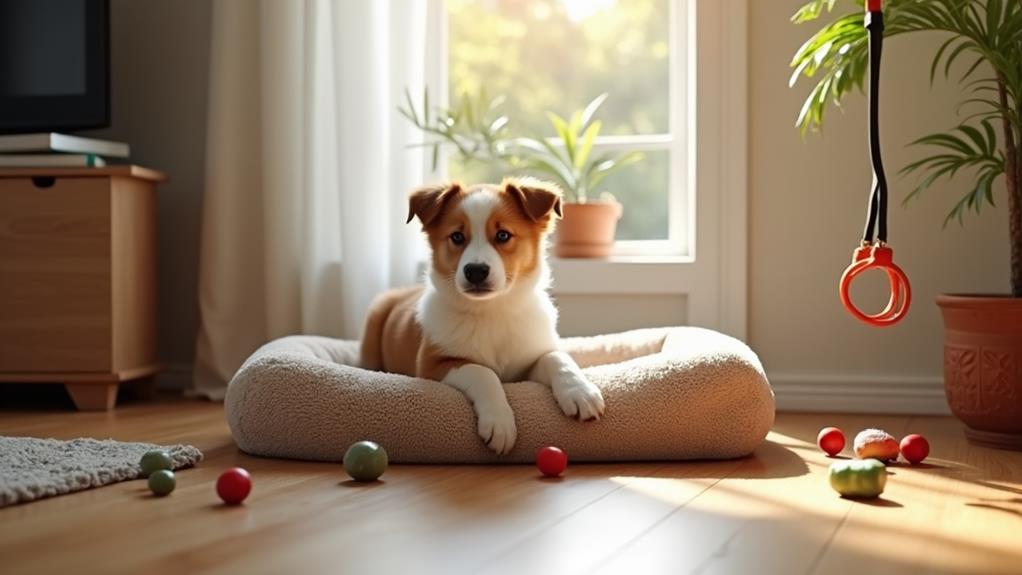
Mastering the Place command opens a domain of possibilities for practical applications in your daily life with your puppy. This command isn't just about keeping your dog in one spot; it's a tool that can transform your interactions and adventures with your furry friend. With consistent training, you can teach your dog to settle in different environments, regardless of whether you're at home or exploring the great outdoors. Here are some scenarios where the Place command shines:
- Outdoor Adventures: Use a dog travel bed during camping trips so your dog stays calm during meals. It prevents them from developing undesirable behaviors like jumping or begging.
- Public Outings: When you go to restaurants or public events, the Place command helps manage distractions, making outings more enjoyable and stress-free.
- Car Rides: Implementing this command during car rides prevents dogs from jumping out of windows or causing distractions, ensuring a safe trip.
- Photography Sessions: Establishing a reliable Place command allows your dog to maintain poses, leading to better photos and less frustration.
Overcoming Common Mistakes
While the Place command offers numerous benefits for your daily adventures with your puppy, it's typical to encounter a few hurdles along the way. One typical mistake is overwhelming your pup with distractions. To guarantee your dog understands the place command, start in a quiet, familiar environment. This helps your dog to go to their designated spot without confusion. Keep that in mind as you gradually introduce distractions, making certain they can stay put confidently.
Another common error is not marking the behavior correctly. If your puppy resists going to the mat, guide them back with calm corrections like "nope," but don't reward mistakes. This reinforces the correct behavior and helps your puppy learn the right cues. It's crucial to keep training sessions short—around 5-10 minutes—to maintain focus and prevent fatigue. This approach gives your dog the best chance to succeed.