How Do You Know if a Place Is a Puppy Mill?
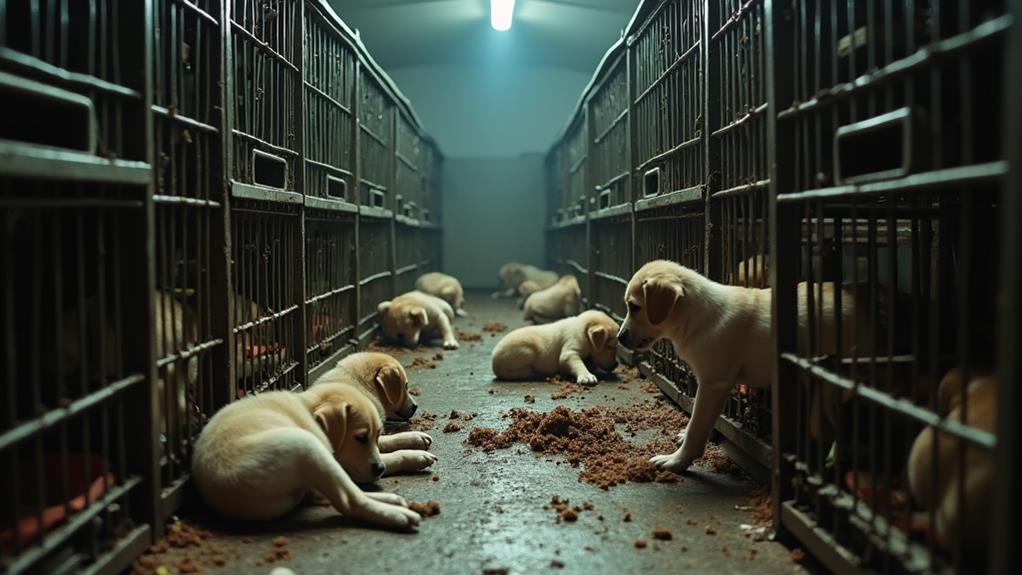
You can spot a puppy mill by identifying several key red flags. Initially, if a breeder won't let you visit or meet the puppy's parents, be cautious. A high number of puppies or multiple breeds on offer might indicate mass production. Puppies sold under 8 weeks or without health records are concerning. Watch for low prices, as they often suggest cost-cutting practices. Transactions in public spaces instead of personal visits can signal a lack of transparency. Furthermore, neglect signs like poor living conditions and unhealthy dogs can confirm suspicions. Investigate further to guarantee your next four-legged friend doesn't come from such a place.
Understanding Puppy Mills
Puppy mills are notorious for their prioritization of profit over animal welfare, leading to heartbreaking consequences for the dogs trapped within them. These large-scale breeding operations often result in poor living conditions, where dogs face overcrowding and unsanitary environments. Such settings frequently lack proper veterinary care and health testing, contributing to long-term health issues and behavioral problems in the animals. It's estimated that a staggering 90% of puppies in pet stores are sourced from puppy mills, underscoring the vital need to understand and recognize these operations.
When looking to bring a puppy into your home, it's important to differentiate between puppy mills and responsible breeders. Responsible breeders prioritize the wellbeing of their dogs, ensuring suitable living conditions and thorough health testing. They maintain high standards of veterinary care and are transparent about the puppy's background and health history. In contrast, puppy mills often neglect these aspects, focusing solely on mass production.
Recognizing red flags such as overcrowded cages and a lack of veterinary care can help guide your decision. By understanding the realities of puppy mills, you can make more informed choices and advocate for better treatment of these animals.
Identifying Red Flags
One clear indicator of a puppy mill is the lack of access to the breeding facility or the inability to meet the puppy's parents. Reputable breeders invite you to see where the puppies live and meet the mother to verify they're raised in healthy conditions. In contrast, puppy mills often hide poor living environments, raising red flags about dog breeding practices.
If you notice multiple breeds or a high volume of puppies available at once, it suggests a large-scale operation typical of puppy mills, focusing on quantity over quality. Puppies should stay with their mothers until they're at least 8 weeks old. If they're sold younger or without proper veterinary records, you're likely encountering another red flag. Reputable breeders prioritize the puppies' health and behavior, guaranteeing proper weaning and care.
Unusually low prices can indicate a puppy mill, as these operations often cut corners to optimize profits. Be wary if sellers avoid personal visits, preferring transactions in parking lots or public spaces. This lack of transparency is a major red flag. When considering a puppy from a pet store, keep in mind that many of these puppies may come from mills, affecting their long-term health and genetic testing assurance.
Health and Behavior Concerns
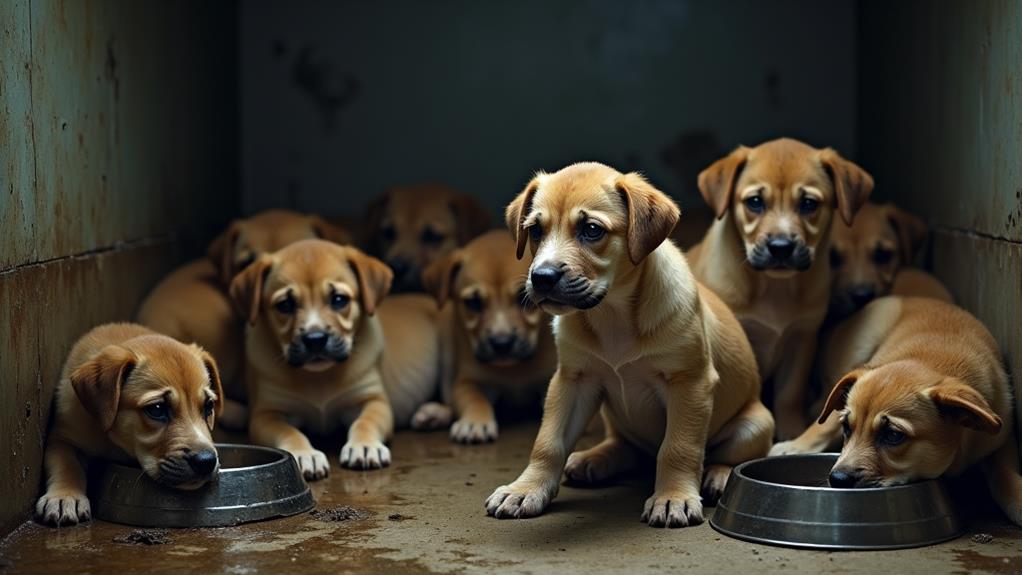
Beyond the visible red flags of puppy mills, the hidden health and behavior concerns can have lasting impacts on a dog's well-being. Dogs from puppy mills often suffer from serious health issues like hip dysplasia and heart problems. These issues stem from inadequate healthcare and neglect, where proper veterinary care is lacking. Unsanitary conditions in these mills exacerbate the problem, leading to difficulties in potty training and adjustment to new homes for many puppies.
Behavioral concerns are another significant issue for dogs coming from puppy mills. The lack of socialization in their early lives contributes to higher rates of fear, anxiety, and aggression. This emotional trauma can make it challenging for the dogs to bond with their new families and adapt to different environments. The early separation from their mothers and siblings, combined with poor living conditions, often results in significant behavioral challenges.
Genetic problems are also prevalent in puppy mill dogs, primarily due to inbreeding and the absence of health testing for breeding stock. These genetic issues can further worsen the health problems, creating a cycle of suffering for the dogs. Understanding these concerns helps you make informed decisions when looking to adopt or purchase a pet.
Legal and Ethical Issues
Maneuvering the legal and ethical landscape of puppy mills can be complex, but it's vital to understanding the broader impact of this industry. Many puppy mills operate legally due to minimal welfare requirements, which allow them to sidestep stricter regulations and avoid thorough inspections. This legal loophole raises significant ethical concerns about animal welfare, especially when you consider that about 90% of puppies sold in pet stores come from these breeding facilities.
States like California and New York have taken proactive steps, banning retail puppy sales in pet stores to curb this issue. However, enforcement of these laws varies widely across the U.S., making consistent protection for animals challenging. Advocacy groups play an essential role in pushing for stronger laws and better enforcement to guarantee healthier dog breeding practices.
From an ethical standpoint, supporting reputable breeders who prioritize animal welfare or adopting from shelters can help mitigate the impact of puppy mills. By choosing these options, you contribute to the decline of unethical breeding facilities and promote healthier dog populations. It's vital to stay informed and support legislative efforts that prioritize animal rights and welfare, helping to create a more ethical landscape in the pet industry.
Choosing Reputable Breeders

Understanding the legal and ethical complexities of puppy mills highlights the importance of choosing reputable breeders. To guarantee you're supporting responsible breeders, start by contacting national breed clubs or organizations like the American Kennel Club for recommendations. These organizations can guide you to breeders who prioritize the health and welfare of their dogs.
Visiting dog shows is another effective way to network with reputable breeders. At these events, you can observe breeding practices firsthand and engage with breeders who are transparent about their operations. Look for those who conduct thorough health testing on their breeding dogs and provide documentation of health records and lineage.
Reputable breeders will welcome you to visit their facilities, allowing you to assess living conditions and meet the puppy's parents. This transparency is a key indicator of their commitment to responsible breeding. Moreover, verify that puppies have received necessary vaccinations and veterinary care before adoption.
Personal referrals from trusted sources, such as veterinarians or local animal welfare organizations, can also lead you to ethical breeders. Prioritizing these steps not only helps you avoid supporting puppy mills but also guarantees you bring home a healthy, well-cared-for puppy.
Reporting and Resources
If you suspect a place is operating as a puppy mill, it's essential to take action promptly. Start by gathering evidence like photographs or documentation of the poor living conditions. These can be significant when you report your concerns to local animal control or law enforcement agencies. The Humane Society of the United States offers valuable resources and guidance on reporting puppy mills. They can also help you connect with local authorities to guarantee your report reaches the right people.
Many states provide hotlines or online forms for reporting suspected animal cruelty, allowing you to report puppy mills anonymously if needed. This step can be significant in initiating investigations and potentially rescuing animals from harmful situations. By using these resources effectively, you can help protect puppies from unethical breeding practices.
Additionally, advocating for stronger regulations and supporting local animal welfare organizations can make a considerable impact against puppy mills. Raising awareness in your community about the signs of these operations empowers others to take action. This collective effort can reduce the demand for puppies from cruel breeders and promote responsible, ethical breeding practices. Your proactive steps make a difference in the fight against animal cruelty.